
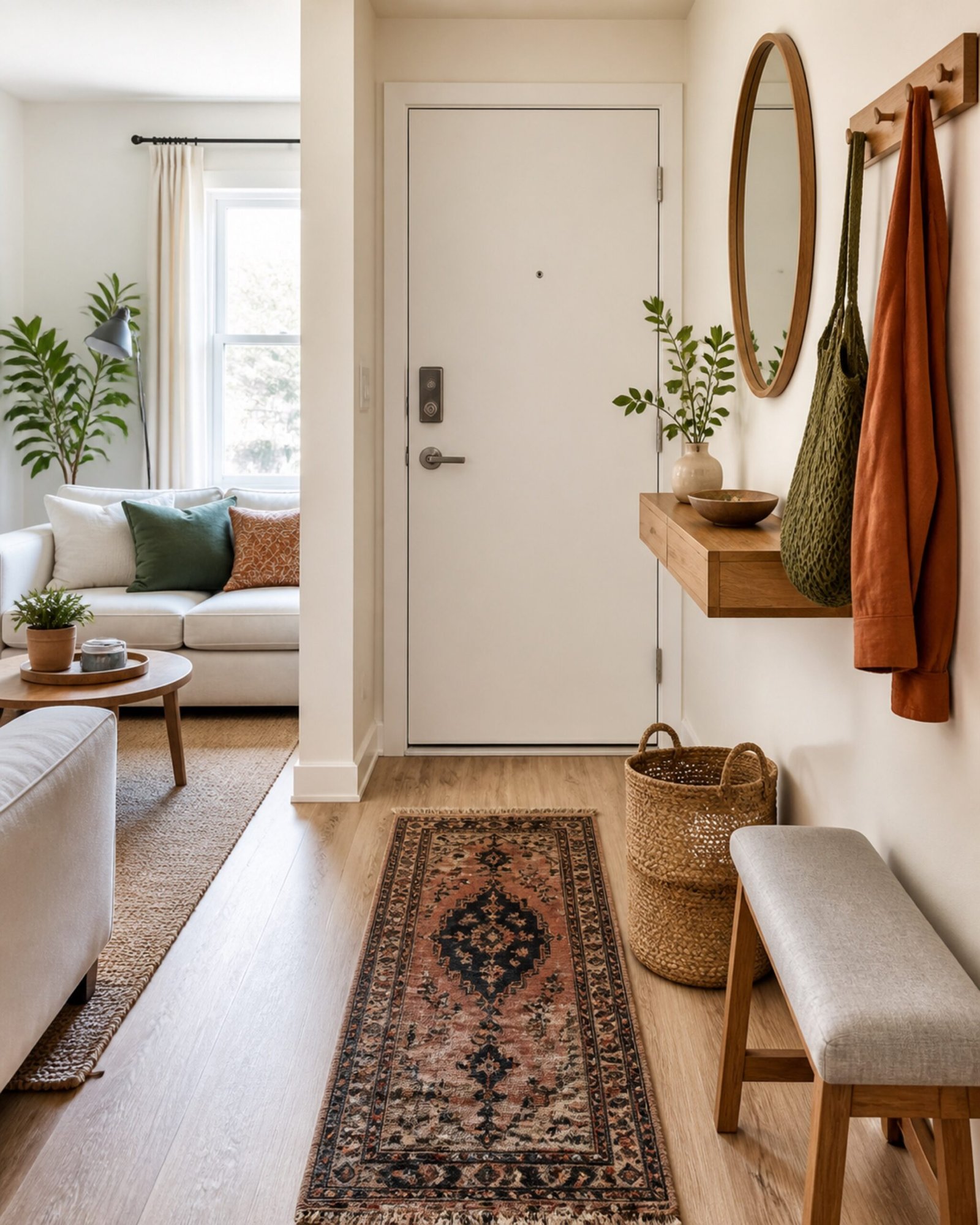
When an apartment door opens directly into the living room, the entry can quickly spread across the whole space. Shoes drift toward the sofa, mail lands on the dining table, and bags end up wherever there is an empty chair. A compact landing zone stops that movement before it starts.
The best entry setup handles only the things used at the door: keys, current shoes, daily bags, and perhaps a coat. Everything else should have a home deeper in the apartment.
Define the entry with a narrow rug
A washable runner or small mat signals where the entry begins and protects the floor. Choose a low pile that does not catch under the door. Non-slip backing or an appropriate rug pad matters in a busy transition area.
Use the wall behind the door
If clearance allows, an over-door organizer or shallow hook rail can hold light daily items. Confirm the door still closes freely and hardware does not damage the frame. Avoid loading the door with heavy bags that strain hinges.
Choose a shoe cabinet with a shallow profile
Tilt-out shoe cabinets store several pairs while projecting less than a traditional bench. Measure baseboards and door swing before buying. Keep only the shoes worn that week near the entrance and rotate the rest into bedroom storage.
Add a tiny landing shelf
A small wall shelf or narrow console gives keys and mail a clear destination. If mounting is not allowed, choose a stable freestanding table. Keep the surface nearly empty and use one tray to prevent coins, receipts, and small objects from spreading.
Create an entry edge with furniture
The back of a sofa, a tall plant, or the side of a bookcase can mark the boundary between entrance and living area. Open furniture keeps light moving through the room. Make sure the route from the door remains wide and obvious.
Use hooks according to frequency
Give each household member one everyday hook, then store occasional coats elsewhere. Too many hooks invite visual clutter and can overload adhesive hardware. Place hooks where hanging items do not block switches or brush against furniture.
Include one seated option only if it fits
A small stool or storage bench makes shoes easier to put on, but it should not squeeze the walkway. A stool that slides under a console can disappear when not in use. If there is no room, a sturdy nearby dining chair can serve the same purpose.
Control incoming paper immediately
Use a slim wall pocket or one upright file for mail that needs action. Recycle envelopes and unwanted paper before they enter the living area. A small system processed weekly works better than a large basket that hides months of paper.
Make lighting automatic and gentle
A plug-in night-light or motion-activated rechargeable lamp can make the entry safer after dark. Position it where it does not glare into the living room. Rechargeable lights should be used and charged according to their instructions.
Finish with a quick exit check
Place a small mirror near the door if it reflects useful light and does not crowd the wall. Then test the entry with a bag in one hand: you should be able to enter, set down keys, remove shoes, and close the door without moving anything.
For baskets, closed storage, and clutter-control ideas that work throughout the apartment, see our small-space storage guide.
Frequently asked questions
How wide should an apartment entry path be?
Keep it as wide and unobstructed as the space and local safety requirements allow. The door must open fully, and the path should never interfere with an exit.
Where should shoes go when there is no foyer?
Use a shallow cabinet, one lidded basket, or a tray near the door for current pairs. Store off-season and occasional shoes elsewhere.
How can I separate an entry from the living room?
A runner, narrow console, the back of a sofa, or an open bookcase can create a visual edge without building a wall.
A useful entryway is a small routine expressed through furniture. Give the daily essentials one compact landing zone, keep the exit clear, and resist turning the doorway into general storage.

[…] 10 Small Entryway Ideas for Apartments Without a Foyer […]