

Bare rental windows can make a room feel unfinished, but drilling is not the only way to add privacy or softness. The right solution depends on the window recess, surface, fabric weight, and how often you open it.
Measure in three places because old frames are rarely perfectly square. Follow the hardware instructions, keep coverings away from heat sources, and never rely on light-duty adhesive for heavy rods.
1. Use a tension rod inside the frame
A properly sized tension rod creates a clean inset look for lightweight curtains. It needs two firm parallel surfaces and enough grip to stay stable.
2. Hang cafe curtains for privacy and light
Covering the lower half of a window protects privacy while keeping daylight above. Linen-look panels make this practical solution feel deliberate.
3. Try a compression curtain system
Some no-drill rods brace against the window surround and can carry fuller panels than a small tension rod. Match the product to the exact opening and fabric weight.

4. Use removable hooks only for light sheers
Surface-safe hooks can support a very lightweight rod when their instructions allow it. Prepare the surface correctly and leave the adhesive to cure before loading.
5. Apply removable privacy film
Static-cling film works well in bathrooms or street-facing rooms. Clean the glass carefully and test a corner; use a removable product rather than permanent adhesive film.

6. Choose a tension roller shade
An inside-mount tension shade gives a tailored look and simple light control. Confirm the frame depth and handle clearance before ordering.
7. Layer sheers with a blackout panel
Use a compatible double tension or compression system, keeping total weight within the rating. The sheer handles daytime privacy and the blackout layer supports sleep.

8. Clip fabric to create a custom cafe panel
Curtain clips let you hem less and adjust length. Choose washable fabric with enough fullness to gather softly without becoming heavy.
9. Let panels skim the floor
Full-length panels look polished when they barely meet the floor. Heavy puddling collects dust and adds weight that no-drill hardware may not need.
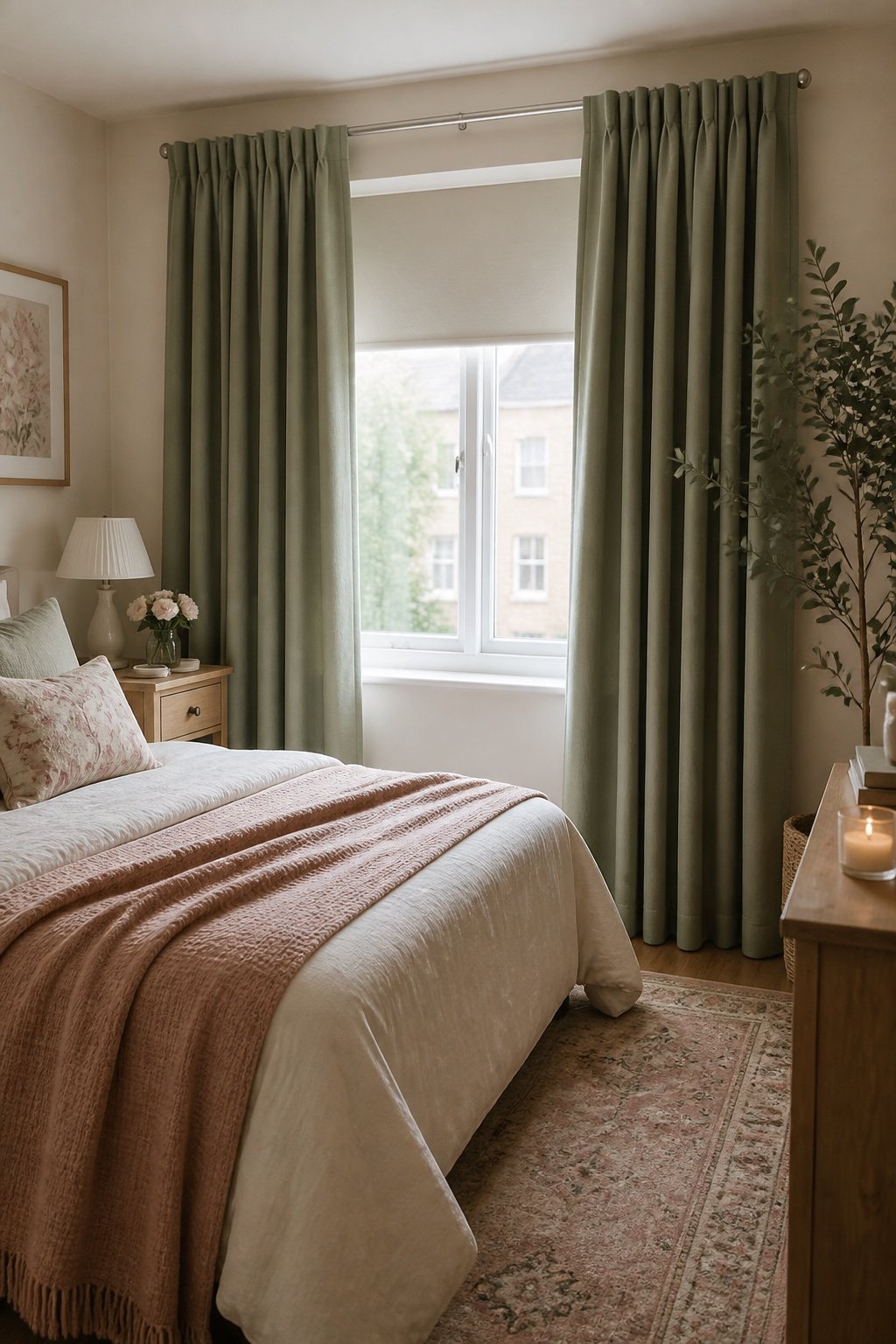
10. Repeat one fabric through a small apartment
Using the same soft neutral in adjoining rooms makes the windows feel coordinated and the apartment calmer. Change opacity where privacy needs differ.
11. Check the installation every season
Temperature and humidity can shift tension hardware. Recheck the fit, especially after opening windows or changing fabric.
Related Perch Room guides
Frequently asked questions
What is the strongest no-drill curtain option?
A purpose-built compression system is often more capable than small tension rods, but every product has its own span and weight limit.
Can no-drill curtains hold blackout panels?
Only if the hardware is rated for the combined fabric and rod weight. Choose lighter blackout fabric and verify the fit regularly.
Does privacy film damage windows?
Static-cling removable film is designed to release, but glass coatings and products vary. Check the manufacturer guidance and test first.
The best small-space solution is the one you can keep using. Start with one change, live with it for a week, and adjust before buying the next organizer or piece of furniture.