The best studio divider creates a boundary without stealing the daylight or the route through the room. Decide whether you need privacy, storage, a visual cue, or all three before choosing the divider.
Anything tall must be stable. Follow anti-tip guidance, keep exits and heaters clear, and use only lease-approved attachment methods.
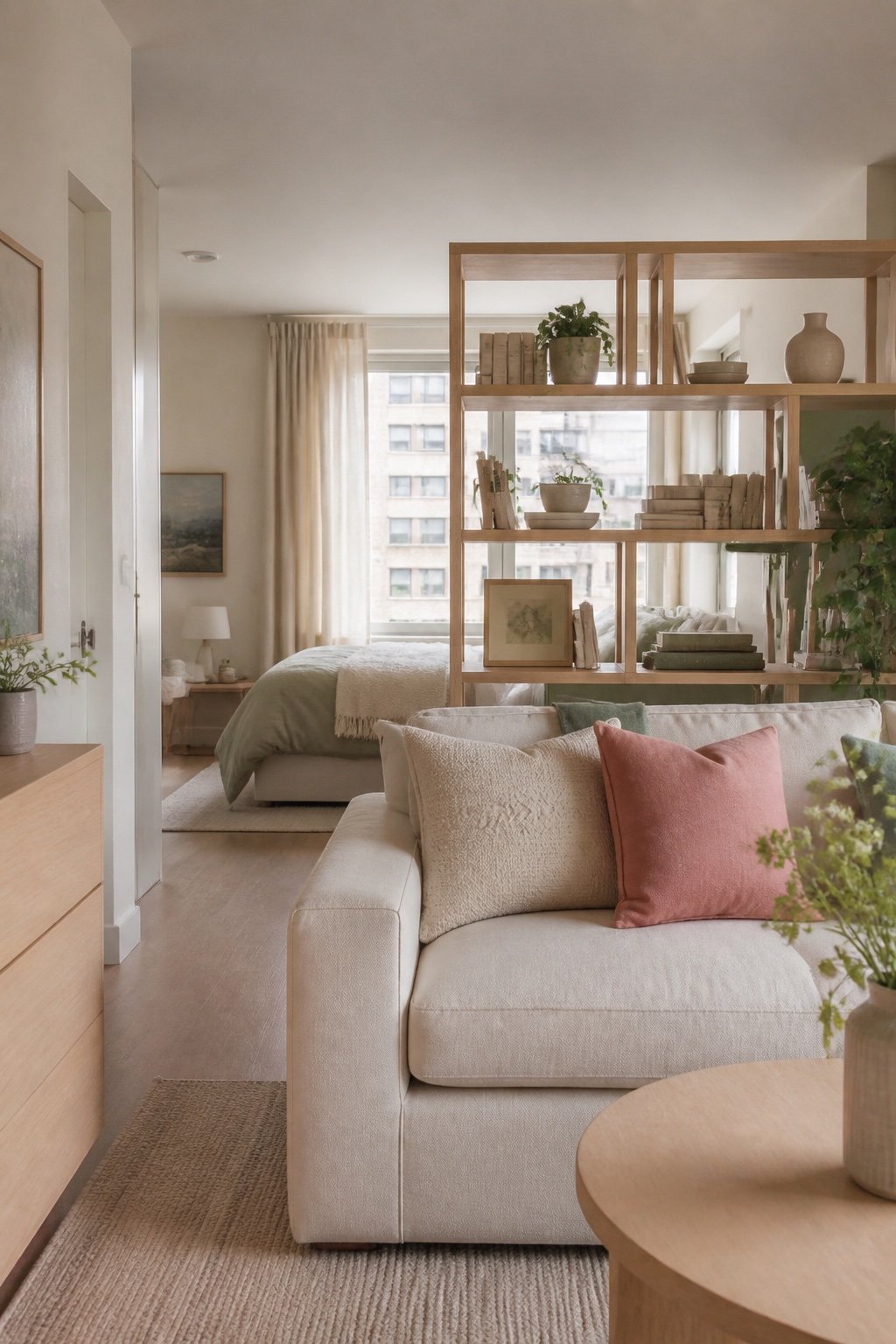
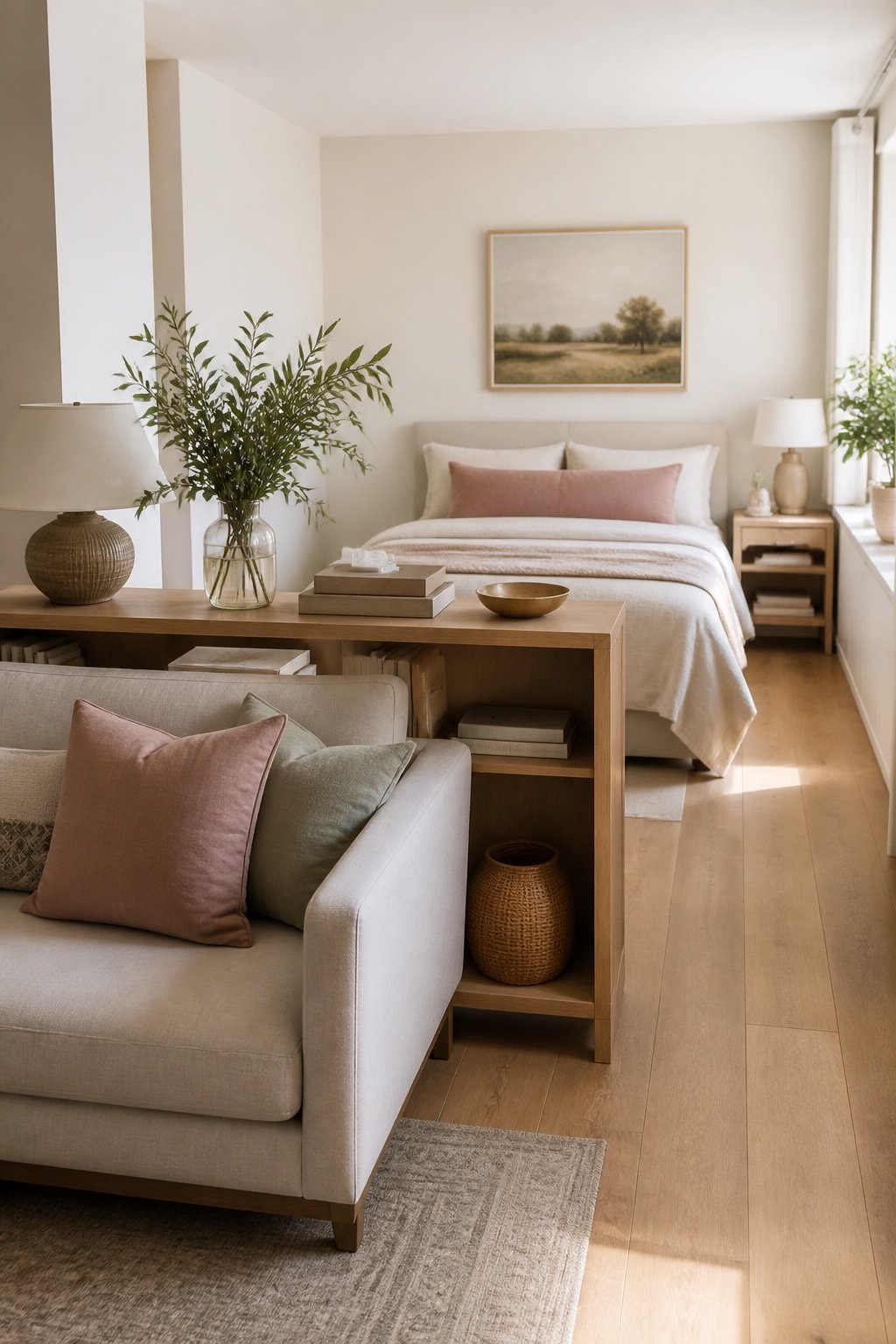
1. Divide with an open bookcase
An open-backed shelf separates zones while letting light pass. Keep heavier items low and avoid overfilling every cube.
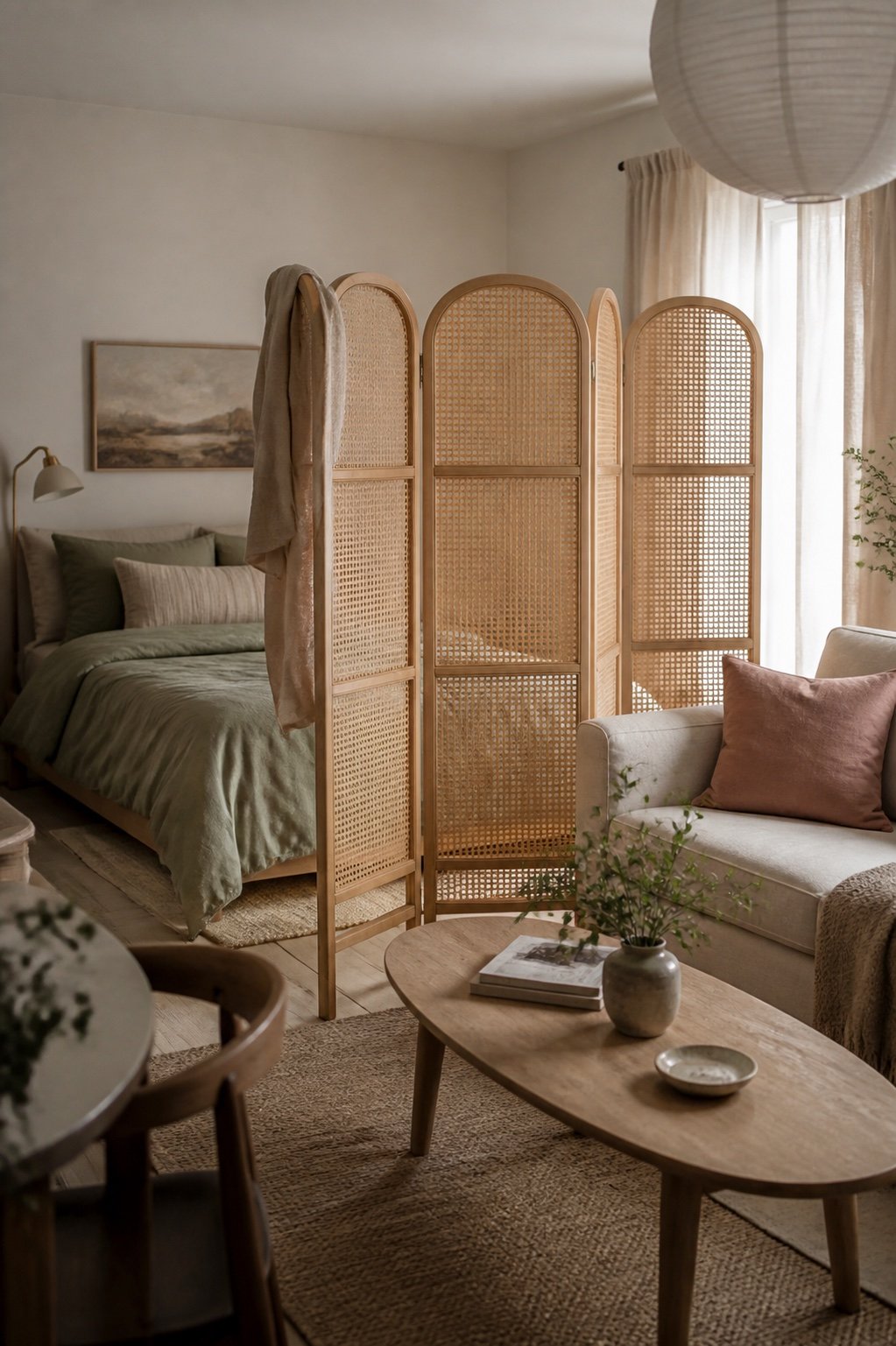
2. Use a folding rattan screen
A screen adds instant privacy and folds away when you want one open room. Choose a broad stable base and place it outside the main traffic line.
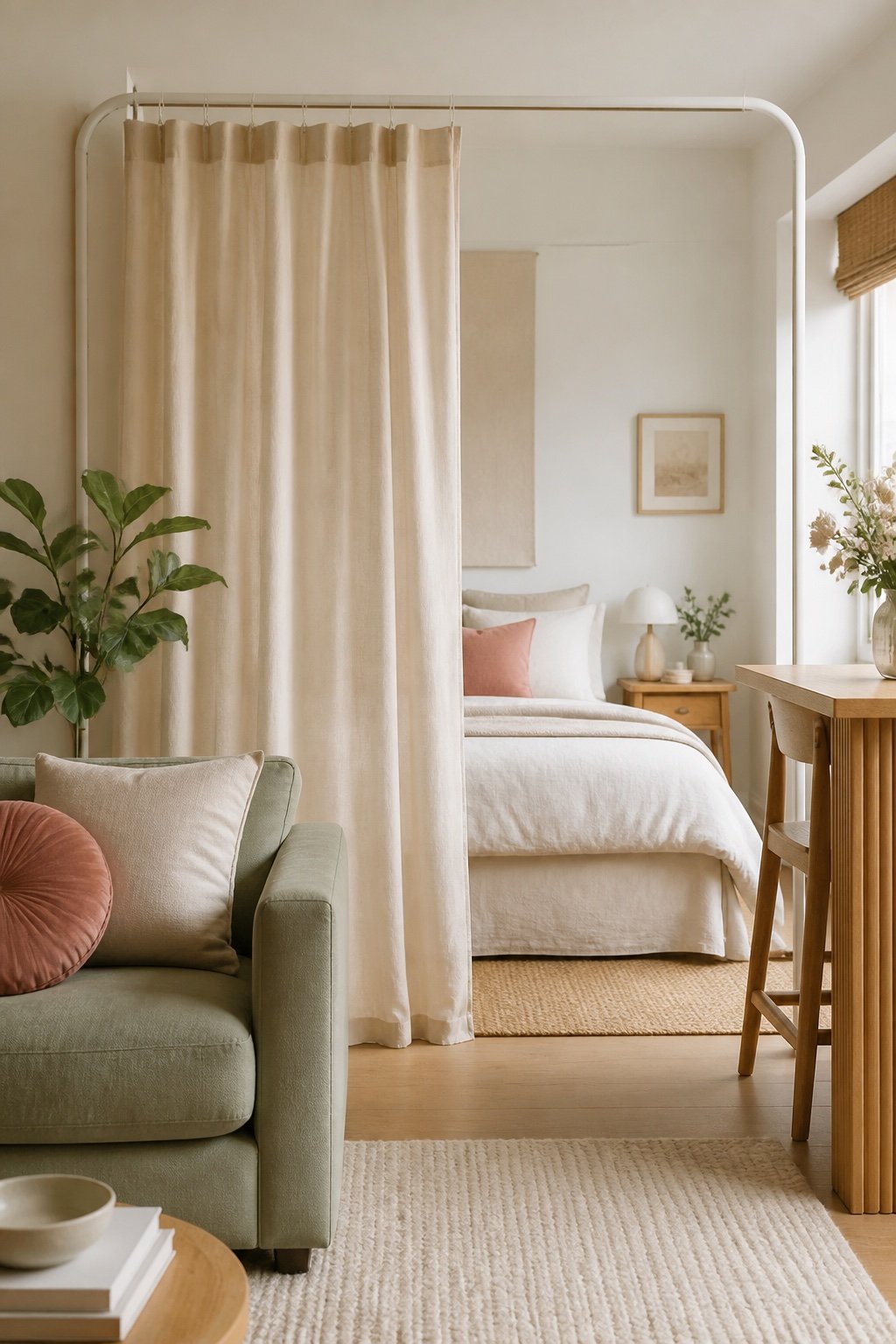
3. Hang a curtain from a freestanding rail
A purpose-built divider rail gives softness without drilling. Sheer fabric suggests a boundary; opaque fabric offers more privacy.
4. Turn the sofa into the divider
Float the sofa with its back to the bed and place a slim console behind it. The furniture itself creates the line between rest and living.
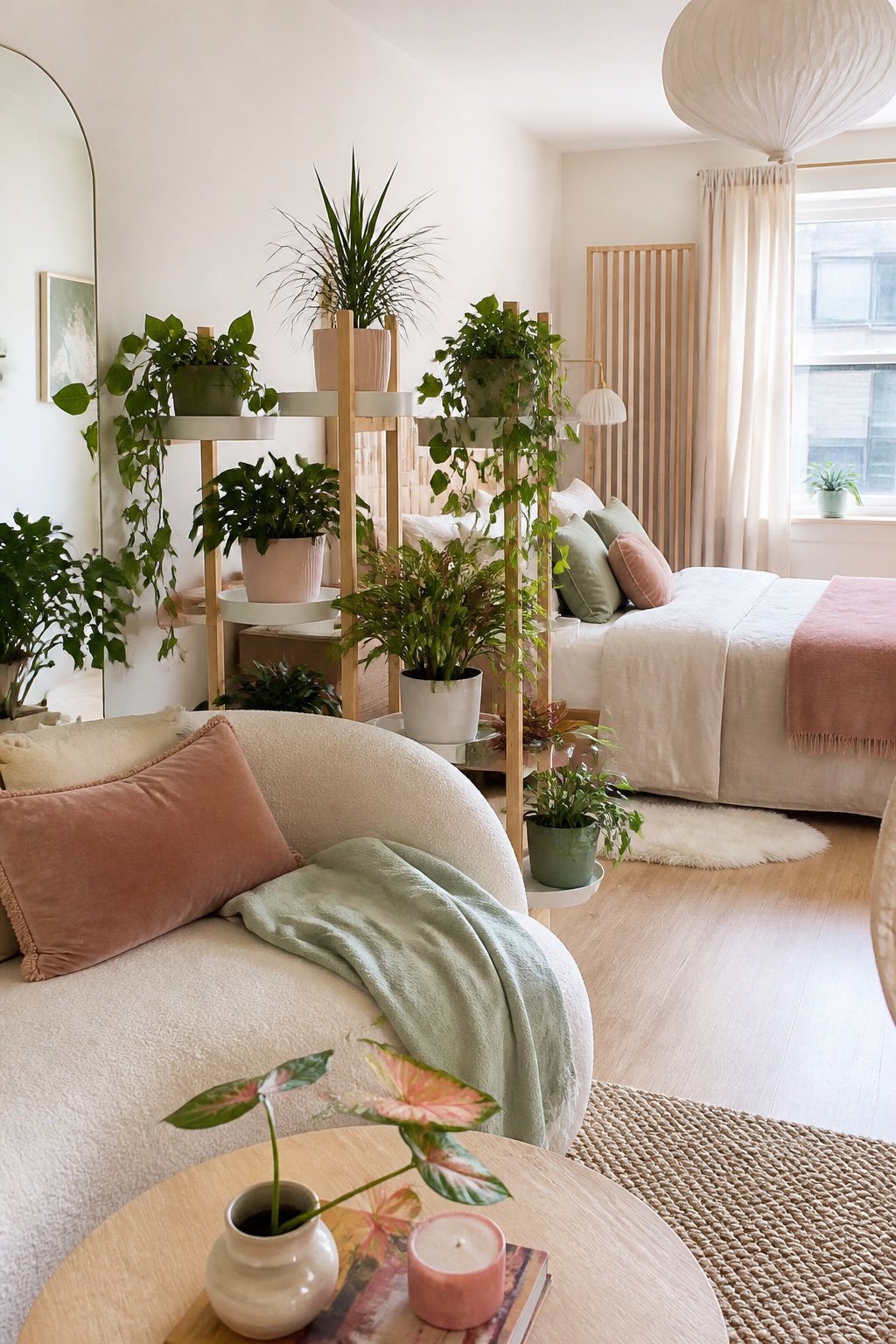
5. Layer plants on stable stands
A staggered group of plants creates a light-filtering screen. Verify pet safety and match each plant to the available light.
6. Place a wardrobe between zones
A freestanding wardrobe can hide the bed and add essential storage. Consider the unfinished back and furniture stability before positioning it mid-room.
7. Use a slatted freestanding panel
Vertical slats suggest architecture while preserving sightlines. Choose a manufactured freestanding unit rated for its height rather than improvising an unstable panel.
8. Define the bed with a tall headboard
A substantial upholstered headboard or floor-standing canopy frame can make the sleep zone feel enclosed without cutting the whole room in half.
9. Let a dining table mark the transition
Place a narrow table between kitchen and living areas. It becomes a functional boundary instead of a decorative object that consumes space.
10. Change rugs at the zone edge
Two coordinated rugs can define sleeping and living areas with no vertical divider at all. Keep edges flat and routes free of trip hazards.
11. Combine one solid and one light layer
For example, use a low dresser for hidden storage and plants above for a softer screen. The mix gives privacy without creating a dark wall.
Related Perch Room guides
Frequently asked questions
How can I divide a studio without drilling?
Use an open bookcase, folding screen, freestanding curtain system, wardrobe, plants, or furniture placement.
What divider keeps a studio bright?
Open shelves, vertical slats, sheer curtains, and plants preserve more light than a solid floor-to-ceiling partition.
Is it safe to use a bookcase as a room divider?
Only when the unit is designed or safely stabilized for that use. Follow its anti-tip instructions and keep heavy objects low.
The best small-space solution is the one you can keep using. Start with one change, live with it for a week, and adjust before buying the next organizer or piece of furniture.