
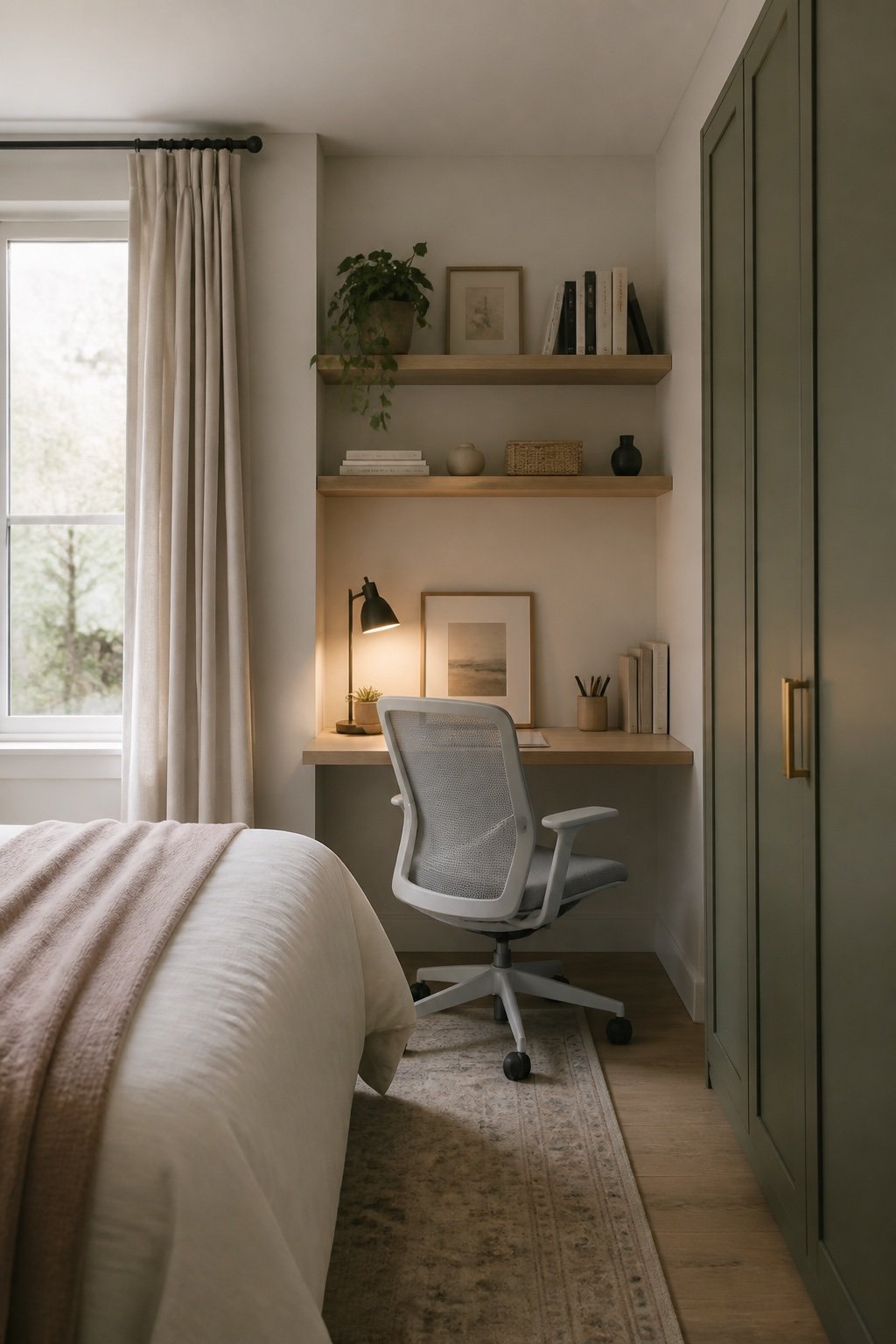
A bedroom office works best when it has a clear edge. Give the desk one corner, keep the route to bed open, and create a small closing ritual so work does not visually follow you into the evening.
Choose the chair first if you work long hours, then size the desk around it. A beautiful desk that forces poor posture or blocks a drawer is not a space-saving solution.
1. Use the quietest corner
Choose a spot away from the door swing and the side of the bed you use most. A corner with a blank wall reduces visual distraction.
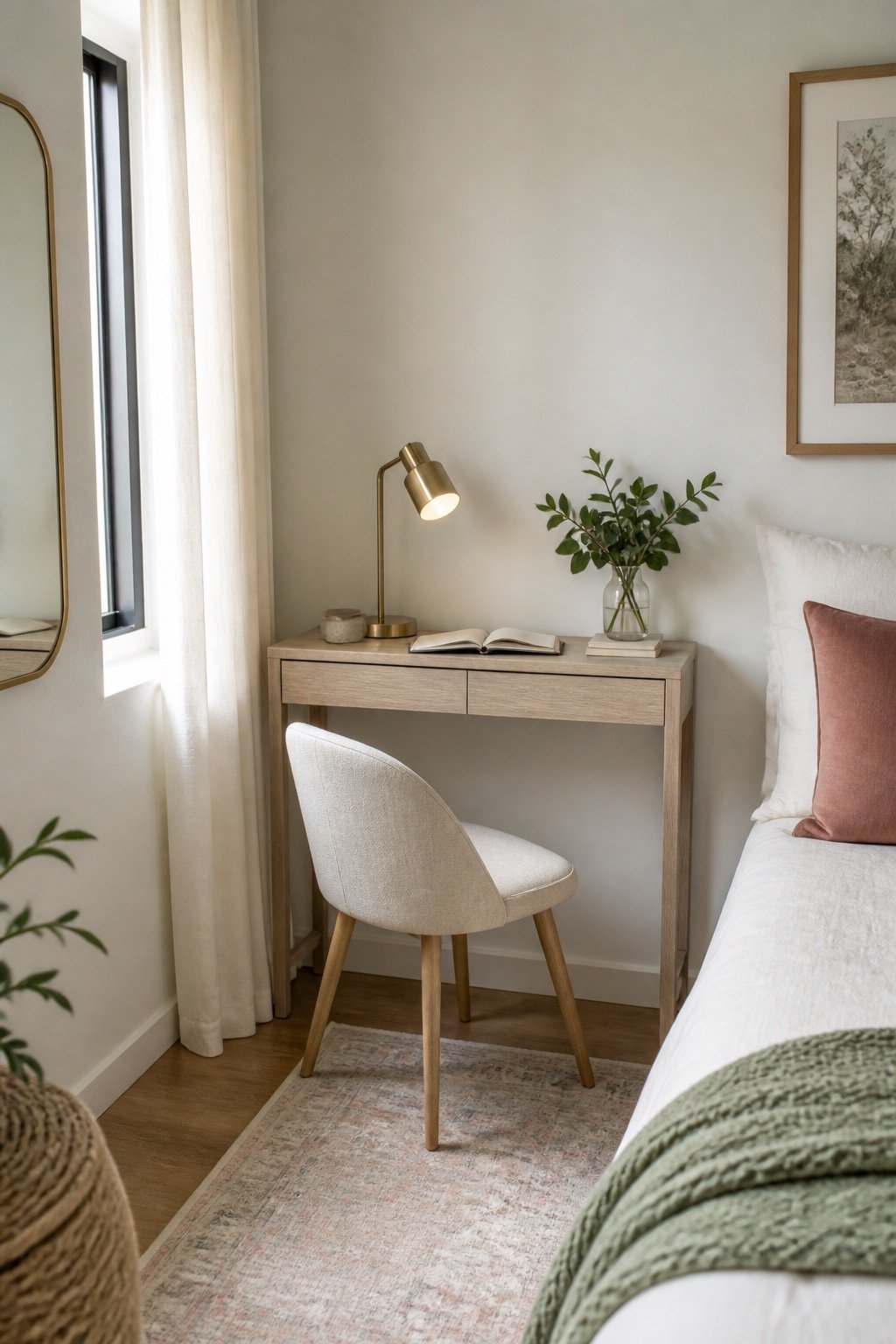
2. Pick a desk with a shallow top
A slim desk can hold a laptop and notebook without stealing the walkway. Check screen distance and legroom rather than buying by width alone.
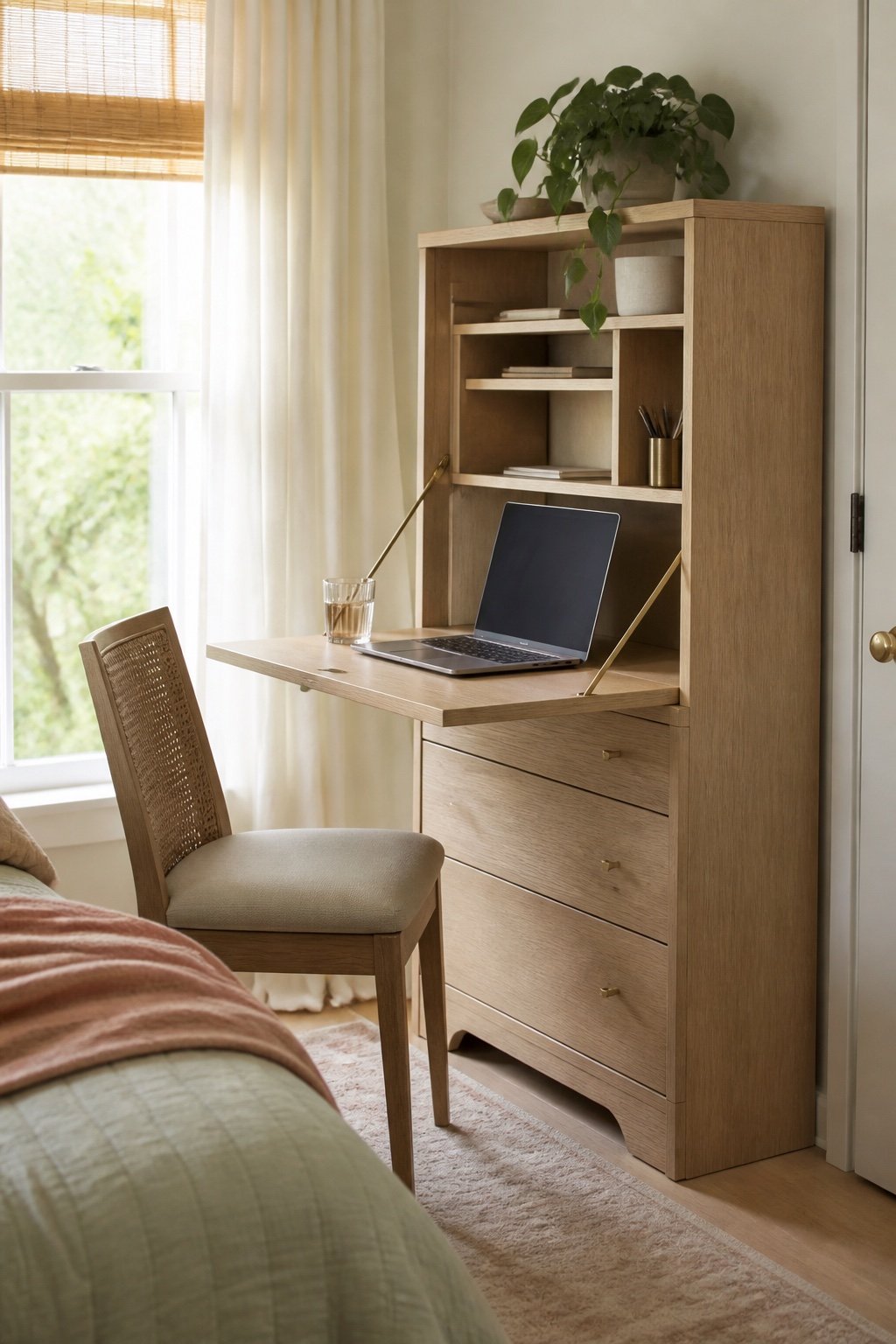
3. Consider a secretary desk
A foldaway front hides the screen and paperwork after work. Make sure the open surface is stable and deep enough for your actual equipment.
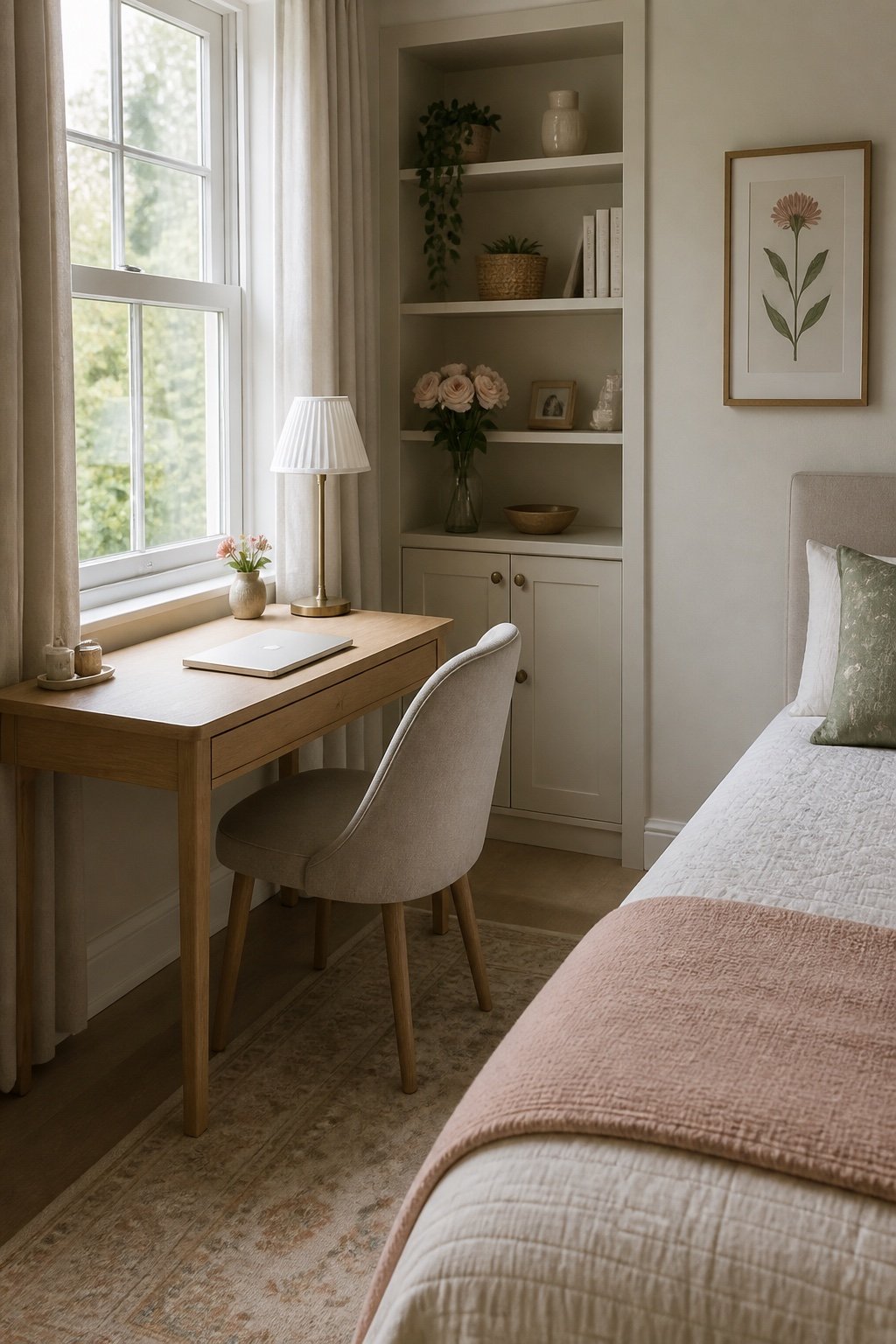
4. Face near a window, not into glare
Daylight can improve the corner, but direct reflection makes screens tiring. Turn the desk perpendicular to the window or add a soft adjustable shade.
5. Use closed storage below eye level
One drawer unit or lidded box keeps chargers and paperwork out of sight. Too many wall organizers can make the bedroom feel like an office supply aisle.
6. Add an adjustable task lamp
A focused lamp lets the rest of the room stay softly lit. Position it opposite your writing hand and keep the bulb out of your direct line of sight.
7. Choose a chair that tucks in
Measure arm height and desk clearance. A compact ergonomic chair that slides beneath the top gives the room back when work ends.
8. Create a camera-ready background
A simple curtain, plant, or calm wall is enough. Avoid filling the sleep zone with decor solely for video calls.
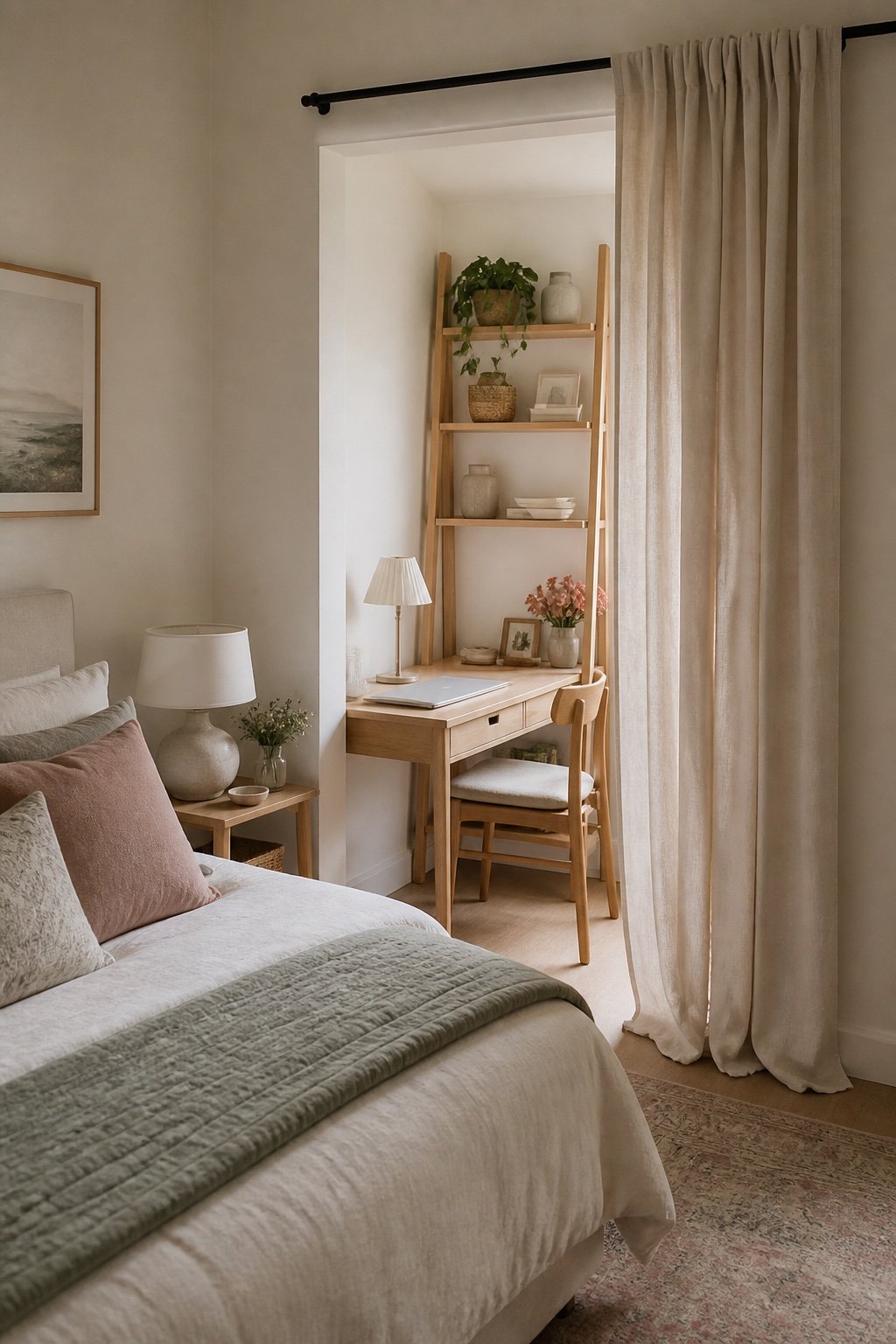
9. Hide the corner with a curtain or screen
A freestanding linen panel can visually close the office after hours. Keep it clear of lamps and make sure the divider cannot tip.
10. End with a two-minute reset
Close the laptop, gather the cord, put one notebook away, and switch off the task lamp. The repeated action tells the room—and you—that work is finished.
Related Perch Room guides
Frequently asked questions
Where should a desk go in a small bedroom?
Use an underused corner that does not block the door, wardrobe, or main route to the bed. Side daylight is helpful when glare is controlled.
How can I hide a bedroom office?
A secretary desk, lidded storage, or freestanding curtain can reduce the visual presence of work after hours.
What desk depth works for a laptop?
It depends on your screen, keyboard, and viewing distance. Test your real equipment on a temporary surface before buying.
The best small-space solution is the one you can keep using. Start with one change, live with it for a week, and adjust before buying the next organizer or piece of furniture.