
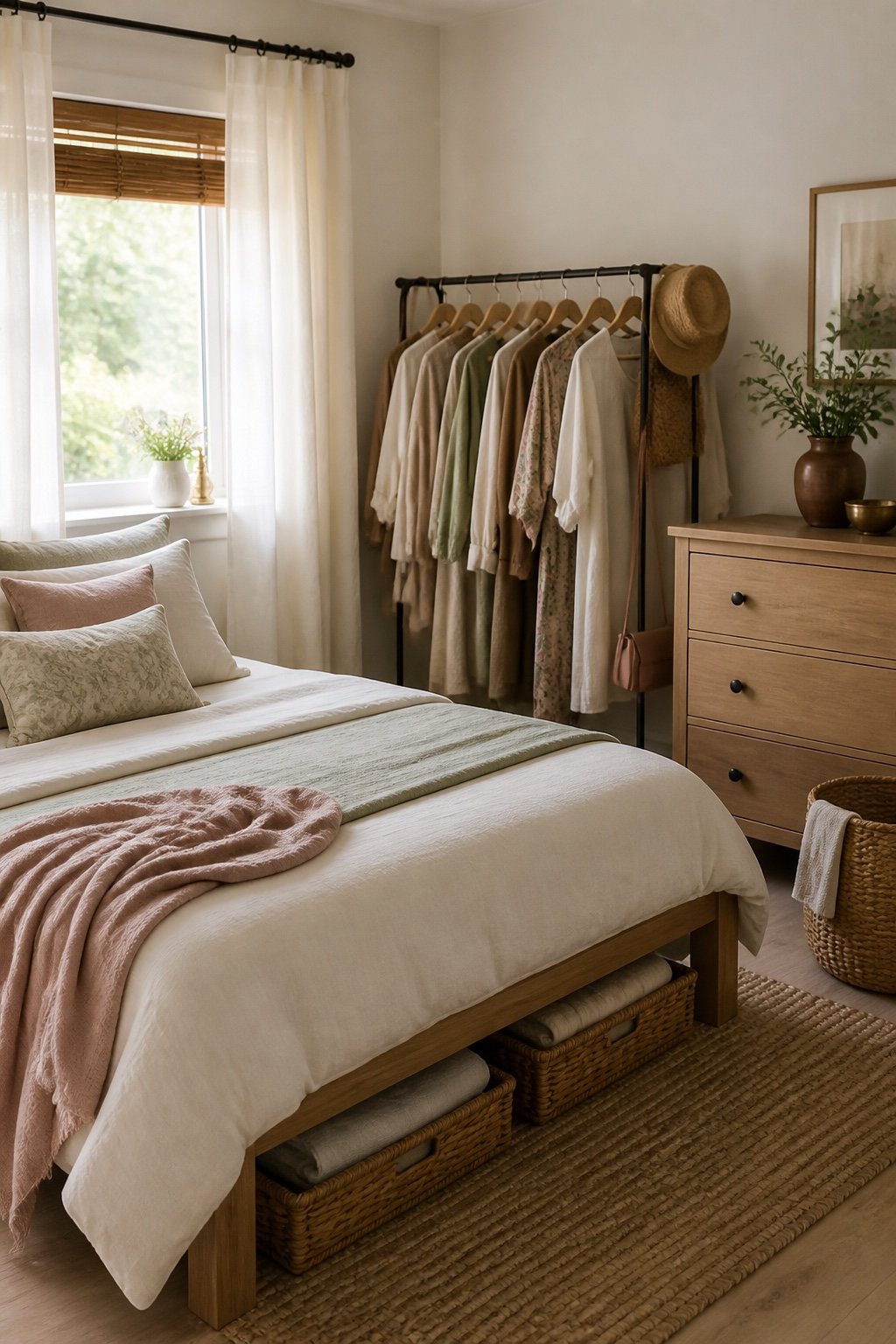
A bedroom without a closet is not automatically a messy bedroom. It simply needs one clear wardrobe zone, enough closed storage to quiet the room, and a limit on what stays visible.
Measure hanging length, folded volume, and under-bed clearance before shopping. A compact combination of one rack, one dresser, and matching containers usually works better than several unrelated organizers.
1. Build one freestanding wardrobe wall
Place a sturdy garment rack and narrow dresser on the same wall so clothes live in one zone. Matching finishes make separate pieces read as a single system.
2. Curtain the rack when you want visual calm
A linen panel on a freestanding frame can soften the view of open clothing. Keep fabric clear of heaters and choose a stable frame rather than fastening anything your lease prohibits.
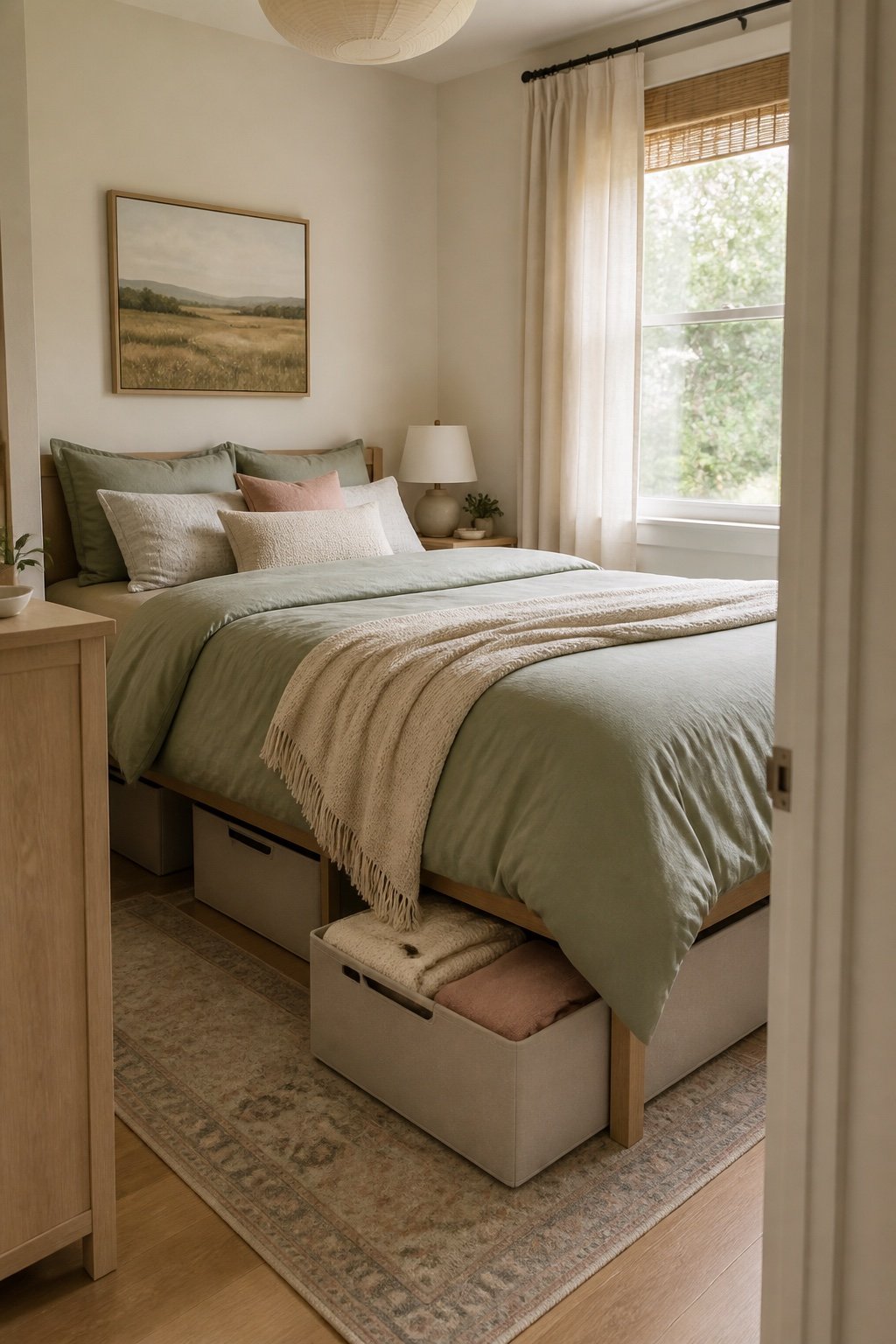
3. Use matching under-bed bins
Measure the narrowest clearance under the bed, including center supports. Low lidded bins protect seasonal items from dust; handles make them easier to use in a tight aisle.
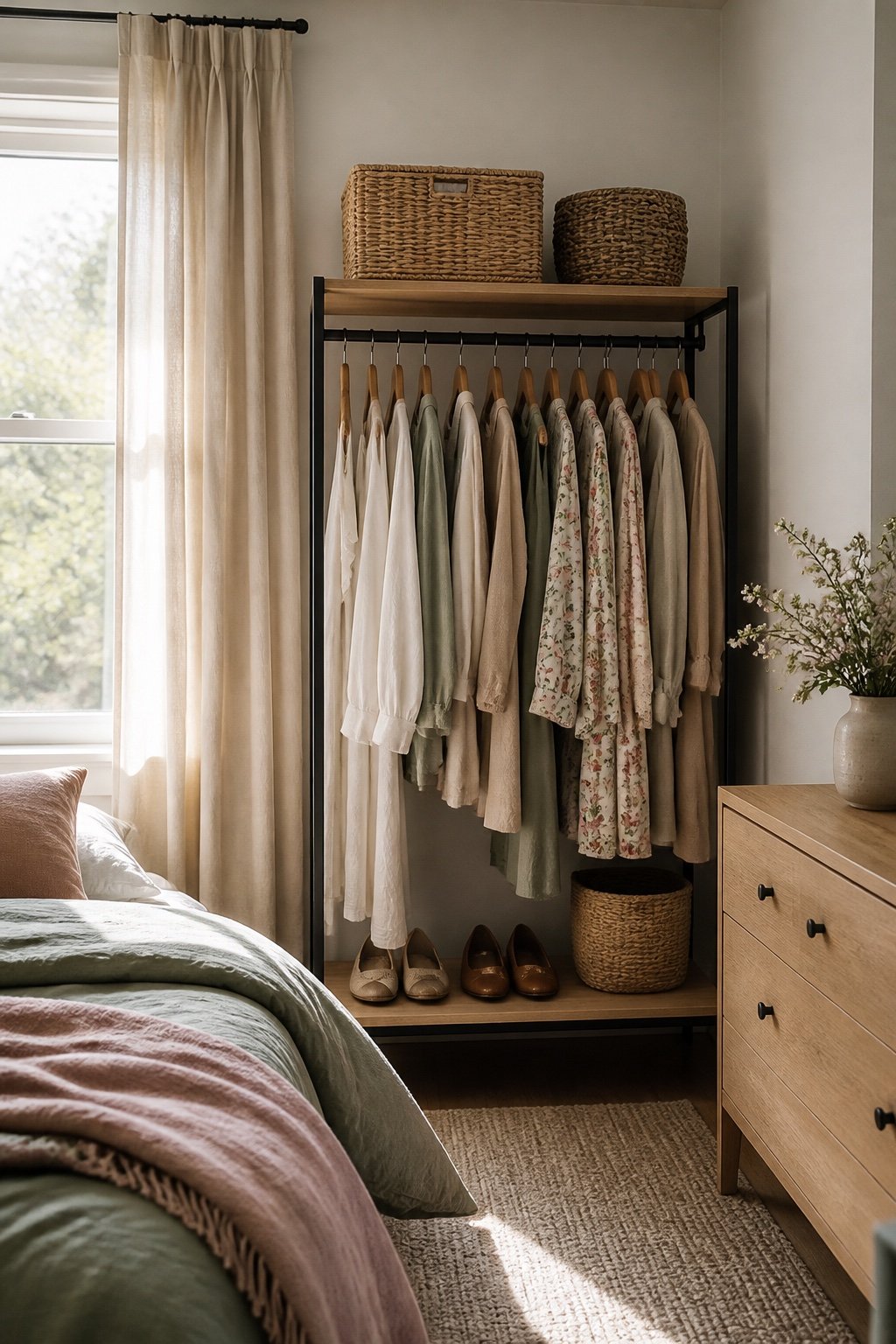
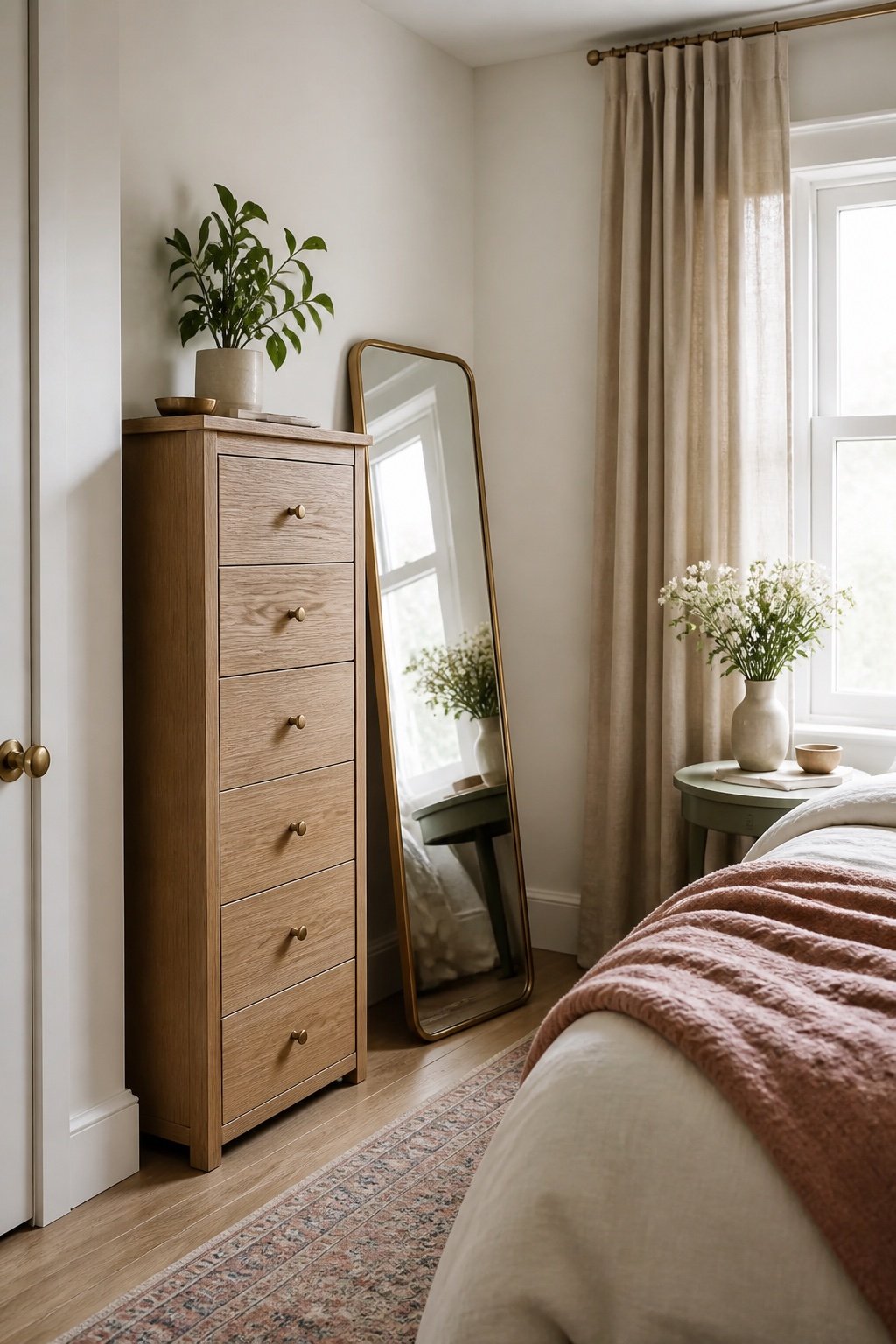
4. Choose a tall narrow dresser
Vertical storage uses less floor width than a long low chest. Anchor furniture only in a lease-approved manner and follow the manufacturer’s anti-tip guidance.
5. Put a storage bench at the foot of the bed
A bench can hold spare bedding and provide a landing place while dressing. Keep at least a comfortable walking gap between it and the opposite wall.
6. Use a nightstand with real drawers
A small three-drawer chest can replace a decorative bedside table. It stores underwear, chargers, and personal items while keeping the top almost empty.
7. Add shelf risers inside open units
Risers create a second level for folded sweaters or shoes without a permanent shelf. Use them only on stable surfaces and keep the heaviest items low.
8. Store accessories in shallow trays
Belts, jewelry, and sunglasses disappear in deep bins. Shallow compartment trays inside the top drawer make the routine faster and reduce overbuying.
9. Keep only a weekly edit on display
Treat the rack like a small boutique: current-season pieces and the items you actually wear. Store occasion and off-season clothes in lidded bins.
10. Use the back of the door lightly
An over-door rail can hold tomorrow’s outfit or a robe. Avoid overloading it, and add protective pads where metal touches the door.
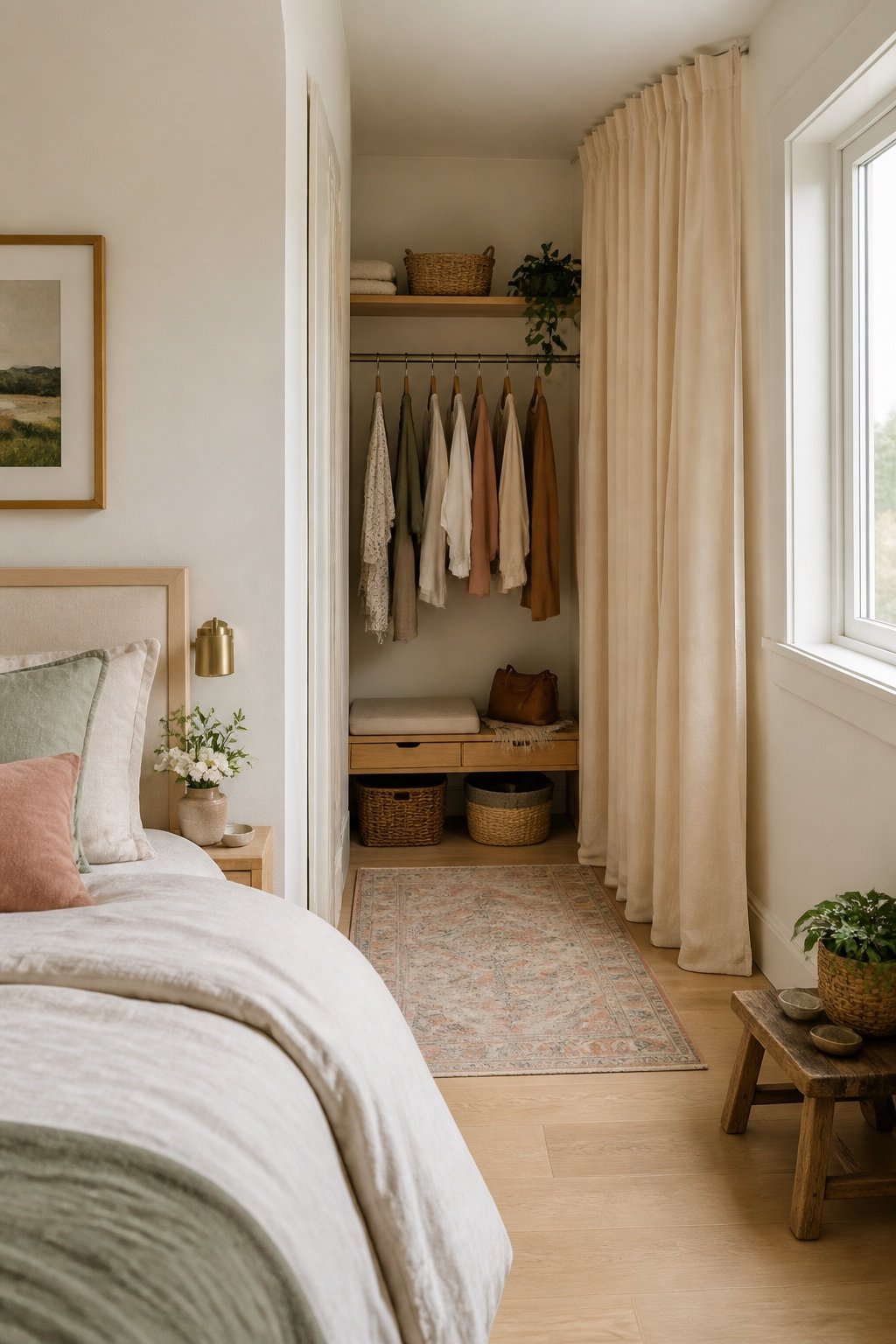
11. Let a leaning mirror finish the wardrobe zone
A full-length mirror beside the rack makes the area feel complete and reflects light. Secure it as recommended and keep it out of a narrow collision path.
12. Edit before adding another organizer
If every container is full, remove what no longer fits or gets worn before buying more storage. Breathing room is part of the system.
Related Perch Room guides
Frequently asked questions
How do I hide clothes without a closet?
Use a garment rack with a freestanding curtain, closed wardrobe cabinet, or coordinated lidded boxes. Keep the visible clothing edit small.
Is an open clothing rack practical in a bedroom?
Yes, if it is stable, not overloaded, and limited to current-use pieces. Closed storage for smaller items keeps the room restful.
What is the best place for a dresser in a tiny bedroom?
Choose a wall that does not narrow the route to the bed or block a door. A tall narrow dresser often uses the footprint efficiently.
The best small-space solution is the one you can keep using. Start with one change, live with it for a week, and adjust before buying the next organizer or piece of furniture.