
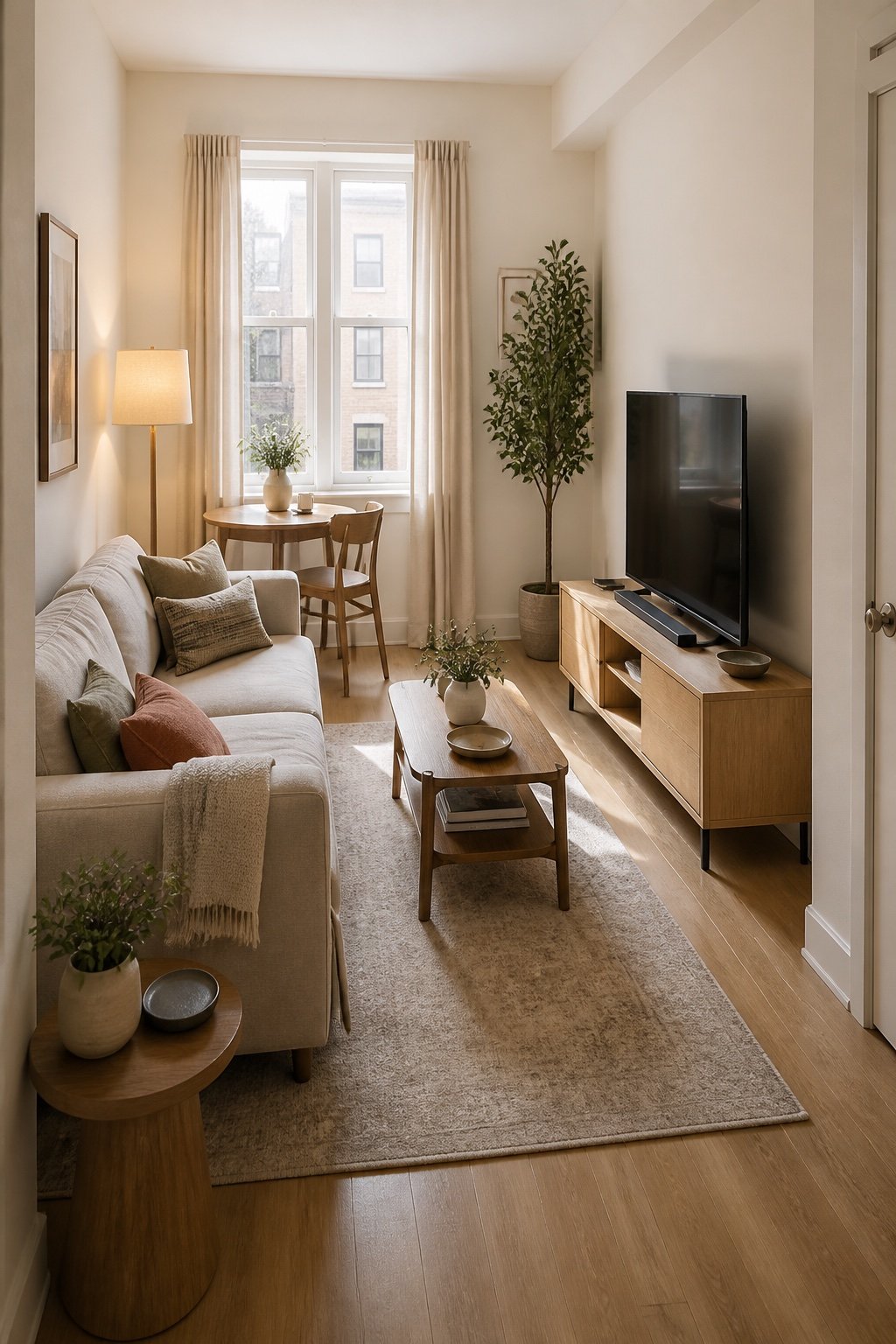
A small living room can hold a comfortable sofa, useful storage, and a television without feeling like a waiting room pointed at a screen. The trick is to decide where people walk first, then fit the seating and TV around that path.
Start by measuring the room, the doors when fully open, and the width of your main walkway. Painter’s tape is useful for testing furniture footprints before you move anything heavy. These layouts work especially well for renters because they rely on placement, not construction.
1. Float the sofa to protect the main walkway
Instead of pushing every piece to a wall, pull the sofa forward just enough to create a clear route behind it. A narrow console can sit at the sofa back and hold a lamp, keys, or baskets. This arrangement makes an open room feel intentional while keeping foot traffic out of the viewing zone.
2. Put the TV on the shortest solid wall
In a narrow room, the shortest uninterrupted wall often gives you the least awkward viewing angle. Use a shallow media console so the room does not lose precious depth. Keep the screen close to seated eye level rather than mounting it high simply to fill the wall.
3. Use a corner TV when doors interrupt every wall
A corner can solve a room with several doorways or windows. Choose a low triangular unit or angle a slim console rather than forcing a large cabinet into the space. Turn the sofa slightly toward the screen and add one lightweight chair that can move when guests arrive.
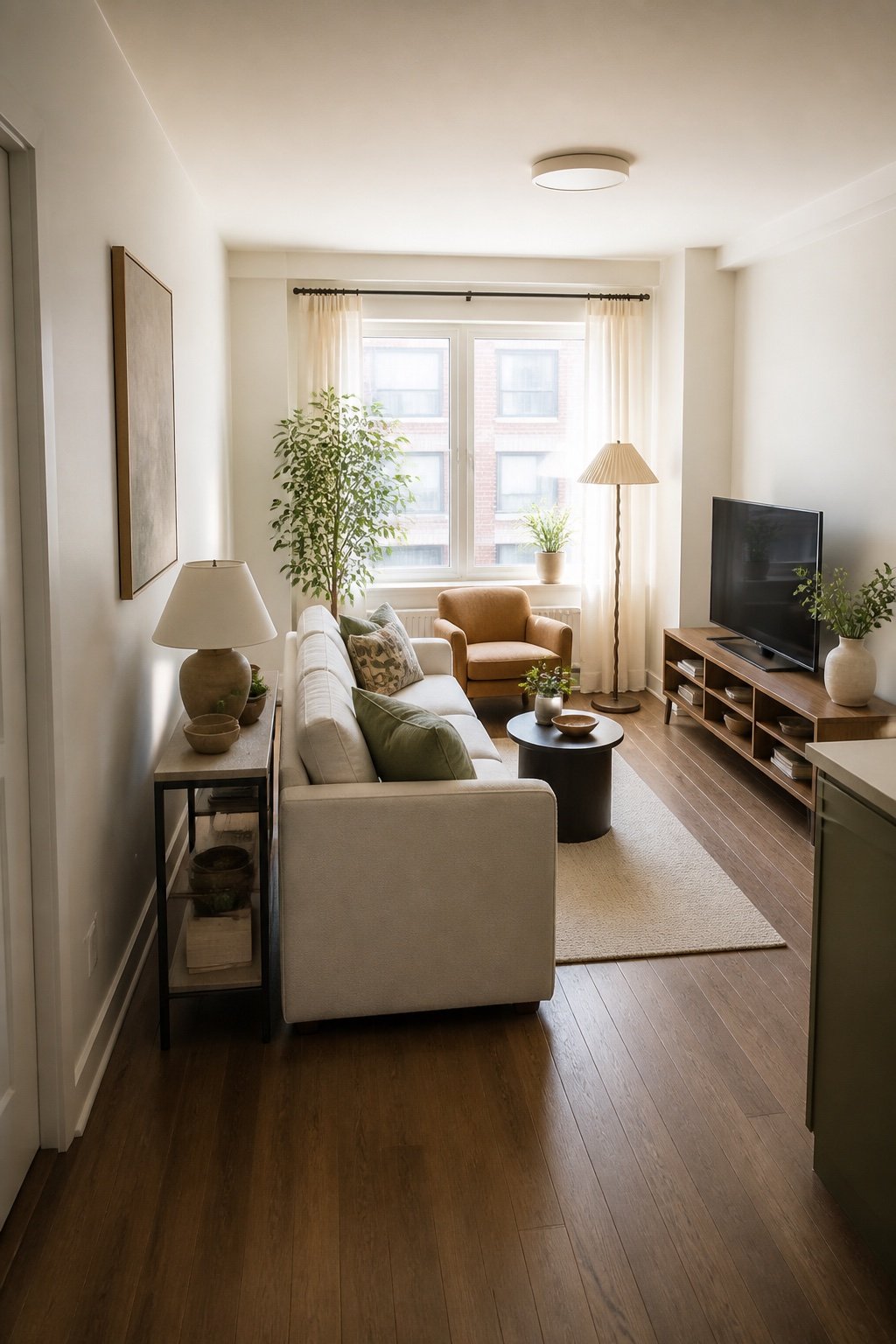
4. Face two small sofas across a slim table
If conversation matters as much as television, place two apartment-scale loveseats opposite one another and position the TV at one end. The layout feels sociable and still gives both seats a reasonable view. A narrow bench or nesting tables will preserve more circulation than a bulky coffee table.
5. Place a loveseat perpendicular to the TV
A loveseat set at a right angle to the television keeps the screen from dominating the first view into the room. Add a swivel chair opposite it for flexible viewing. This is a useful choice when your entry opens directly into the living room.
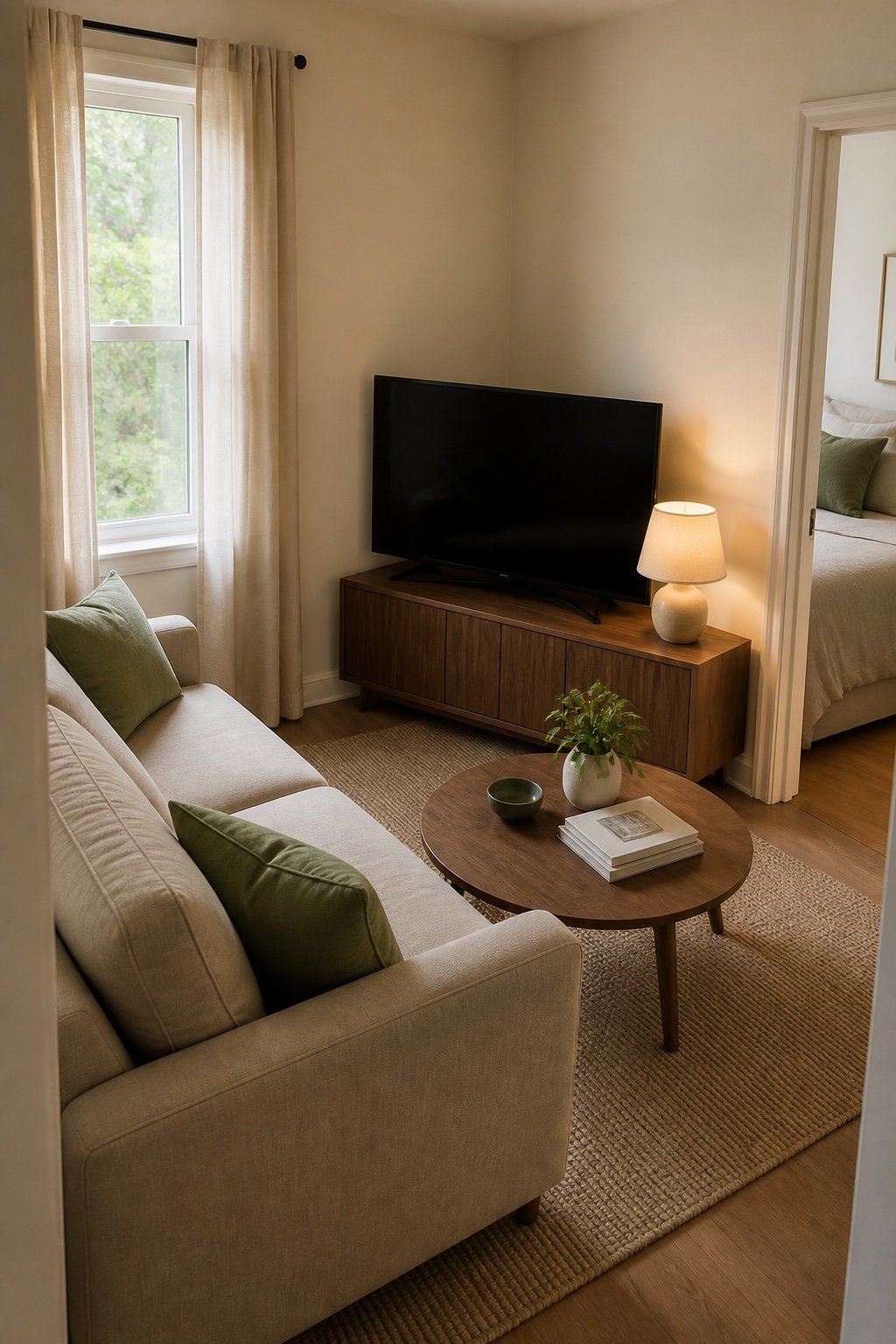
6. Treat the TV console as the room’s storage wall
Pick one low console with closed doors and let it handle games, cables, remotes, and spare linens. Avoid scattering several tiny storage pieces around the room. One calm storage run makes the wall look wider and reduces visual noise.
7. Use a rug to define the seating zone
A rug should connect the seating pieces, not float alone in the middle. In most small rooms, putting at least the front legs of the sofa and chairs on the rug creates a single visual island. Leave the main walkway outside that island so the route stays obvious.
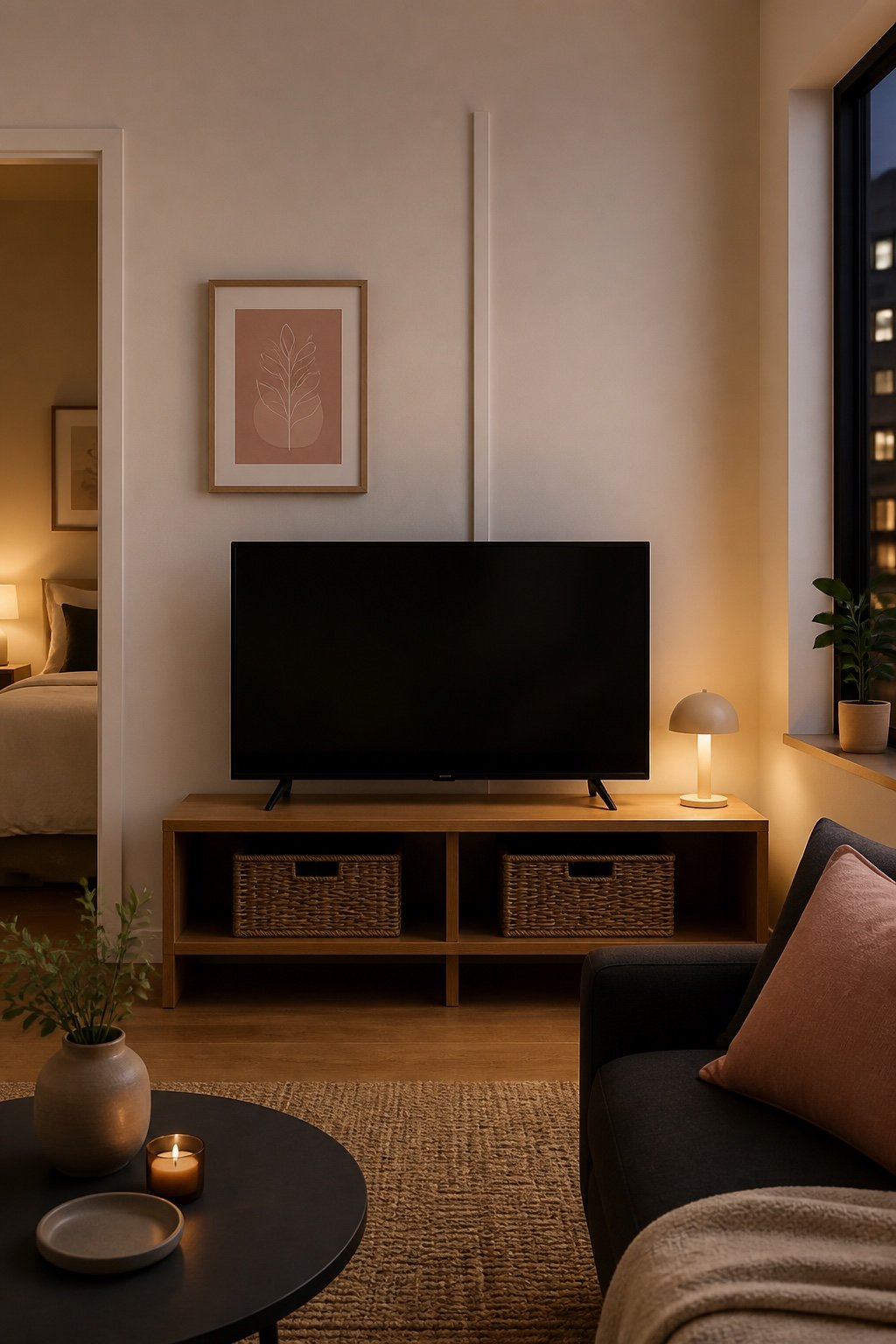
8. Create a dining strip behind the sofa
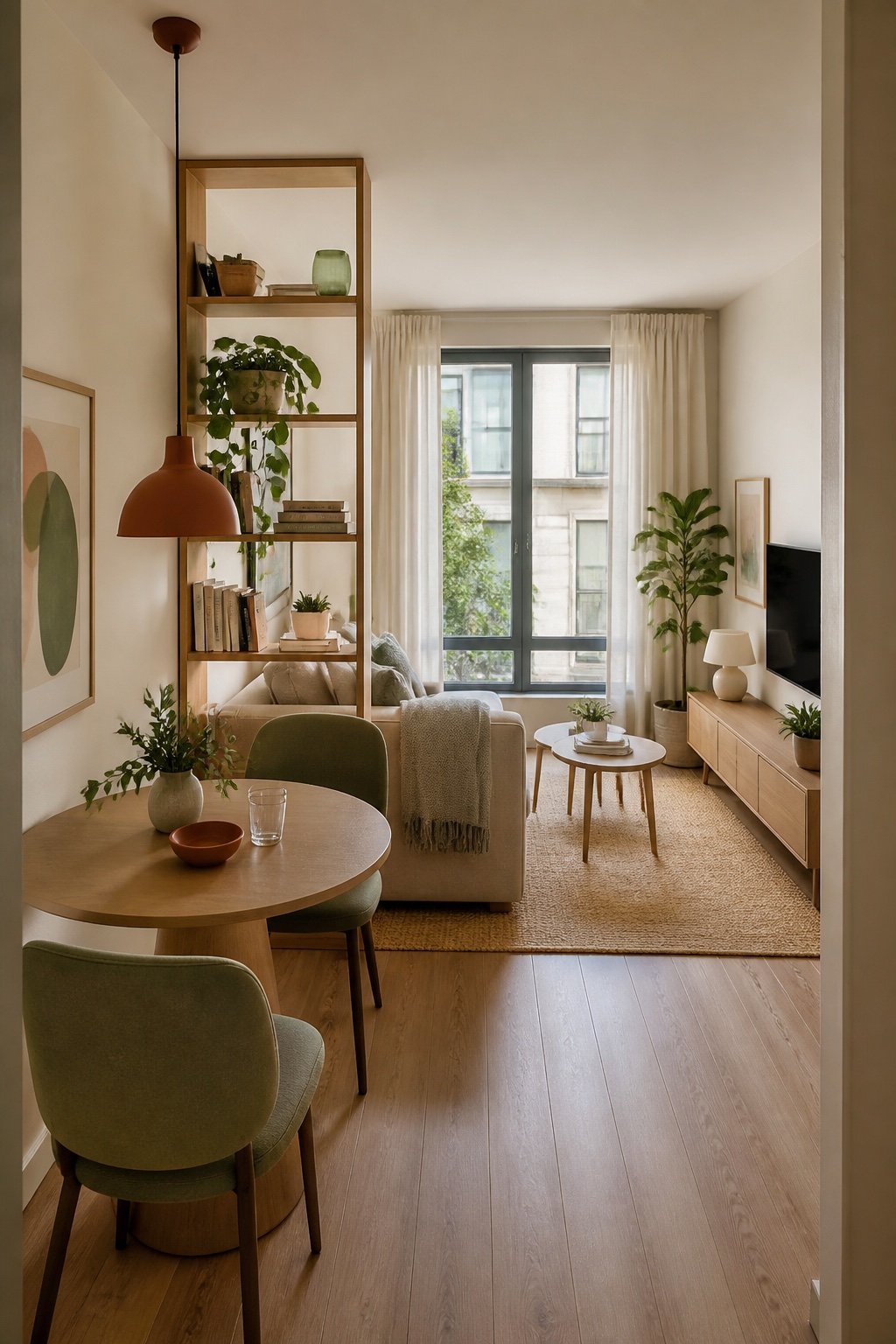
In a studio or open-plan apartment, a narrow dining table behind the sofa can act like a soft divider. Keep enough room to pull out the chairs without blocking the passage. Repeating the same wood tone in the media console helps both zones feel related.
9. Choose nesting tables instead of one large coffee table
Nesting tables give you surface area when you need it and floor space when you do not. Separate them beside different seats during a movie, then tuck them together for cleaning or exercise. Rounded edges are especially forgiving in tight circulation.
10. Keep window walls visually light
If the television must sit near a window, use low furniture and simple window treatments so the wall does not become crowded. Position the screen to reduce glare, but avoid blocking natural light. A movable curtain panel can control reflections during the brightest part of the day.
11. Test the layout from every seat
Before committing, sit in each place and check the screen angle, neck position, lamp glare, and path to the door. Live with the taped layout for a day. Small corrections of even six inches can make the room feel noticeably easier to use.
Related Perch Room guides
- 9 Studio Apartment Layout Ideas That Create Clear Zones
- 10 Small Entryway Ideas for Apartments Without a Foyer
Frequently asked questions
Where should a TV go in a small apartment living room?
Choose a solid wall that allows a comfortable viewing distance without blocking a door, window, or main walkway. A short wall or corner is often more practical than the longest wall.
Should a sofa always face the TV?
No. A sofa can sit perpendicular to the screen if a swivel chair or angled seat gives you flexible viewing. The best layout supports both conversation and everyday movement.
How do I hide TV cords in a rental?
Use a paintable surface cable raceway only if your lease allows adhesive products, or route cords along the back of a console with removable ties. Always follow the product’s weight and surface guidance.
The best small-space solution is the one you can keep using. Start with one change, live with it for a week, and adjust before buying the next organizer or piece of furniture.