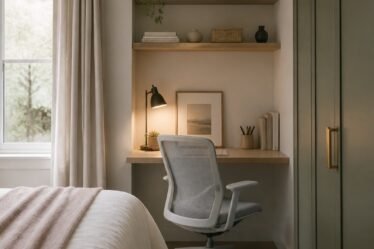
A reading nook does not need a bay window, a built-in bench, or a room of its own. In a small apartment, it can be as simple as one comfortable seat, a light you actually enjoy using, and a place to set down a mug. The trick is to make that little corner feel intentional without filling the room with more furniture.
Before buying anything, look for a quiet patch of floor that already exists: beside a window, at the end of a bed, behind a sofa, or along a wall that currently holds nothing useful. Most cozy reading nooks can fit into roughly three feet of space when every piece earns its place.
1. Turn the corner beside a window into the main feature
Natural light makes even a tiny reading spot feel generous. Place a compact chair beside the window rather than directly in front of it, so the chair does not block the light or the walkway. If the view is not particularly pretty, soften it with a sheer curtain. You still get daylight, but the corner feels calmer and more private.
A chair with visible legs is usually a better choice than a heavy club chair in a tight room. The open space underneath lets more floor show, which keeps the nook from looking crowded.
2. Use the empty end of the bed
Small bedrooms often have an awkward strip between the bed and the wall. A narrow upholstered bench or a small slipper chair can turn it into a useful nook. Keep the seat angled slightly toward the room instead of pressing every piece flat against the wall. That tiny shift makes the arrangement feel relaxed rather than squeezed in.
If the bench doubles as closed storage, use it for extra bedding or books you rotate seasonally. It is one of the easiest ways to add comfort without giving up valuable floor space.
3. Choose a floor cushion when a chair will not fit
A thick floor cushion can work beautifully in a studio apartment, especially beside a low bookcase. Add a firm back cushion against the wall and a washable throw. The setup feels informal, costs less than most accent chairs, and can be moved when you need the floor for guests or exercise.
Skip piles of tiny pillows. They look charming in a photograph, but they quickly become clutter. One supportive cushion and one softer layer are usually enough.
4. Mount a floating shelf instead of adding a side table
A reading nook needs a landing spot, but a traditional side table is not the only answer. A small floating shelf can hold a mug, glasses, and the book you are currently reading. Install it at arm height and keep it shallow enough that nobody bumps into the edge.
Renters can use a lightweight wall ledge only when the wall and mounting method are suitable. If drilling is not allowed, try a slim C-shaped table that slides under the chair, or a sturdy lidded basket that can act as both storage and a surface.
5. Give the nook its own pool of warm light
Overhead lighting rarely creates the soft, focused feeling a reading corner needs. Use a floor lamp with a narrow base, a wall-mounted plug-in sconce, or a small table lamp. Position the bulb slightly behind and above your shoulder so the page is bright without glare.
A warm-white bulb around 2700K creates a cozy evening mood. For practical reading, choose a lamp with enough brightness and an adjustable shade. Cozy should never mean straining your eyes.
6. Store books vertically, not across the floor
When space is tight, go upward. A narrow book tower, two short wall shelves, or a tall bookcase gives the nook identity while using very little floor area. Keep the books you reach for most between knee and eye level. The highest shelf can hold a plant or a small framed print, but leave some empty space so the display can breathe.
If clutter is already a problem, pair open books with one closed basket. Our guide to renter-friendly small-space storage has more ideas for keeping everyday items out of sight.
7. Add texture in one or two deliberate layers
Texture is what makes a plain chair feel like a destination. Try a nubby throw, a small wool-look rug, or a linen cushion. Pick two textures that contrast slightly and repeat one color already used elsewhere in the room. That connection stops the nook from feeling like a random collection of leftovers.
For a rental with hard flooring, a small rug also helps define the zone. Make sure at least the front legs of the chair sit on it so the rug does not look stranded.
8. Use a calm color cue to mark the corner
You do not need to paint an accent wall. A framed print, a removable wallpaper panel, or a single deeper-colored cushion can visually separate the nook. Muted olive, clay, warm beige, dusty blue, and cocoa brown all work well with cozy small-space decor.
Keep the palette tight. One main neutral, one natural tone, and one small accent are easier on the eye than five competing colors.
9. Borrow space from the living room layout
If your living room has no obvious empty corner, pull the sofa a few inches away from the wall and place a slim chair diagonally near one end. The chair becomes part of the conversation area during the day and a reading seat at night. A shared lamp between the sofa and chair can serve both zones.
This arrangement works best when the walking path stays obvious. You should be able to enter the room without turning sideways or stepping around furniture. For more layout ideas, see our small apartment decor guide.
10. Keep the final setup easy to reset
The coziest nook is the one you will actually use. Give every loose item a quick home: books on the shelf, blanket in a basket, charger clipped beside the chair, and cup on the ledge. A two-minute reset at the end of the evening keeps the corner inviting instead of turning it into a drop zone.
A simple reading nook formula
- One supportive seat: chair, bench, or floor cushion.
- One focused light: floor lamp, sconce, or table lamp.
- One landing surface: wall shelf, C-table, or lidded basket.
- One storage solution: narrow bookcase, ledge, or closed basket.
- One soft layer: throw, cushion, or small rug.
Start with those five pieces, then stop. Live with the nook for a week before adding decor. The empty space around it is part of the design.
Common mistakes that make a small nook feel cramped
A chair that is too deep can swallow the corner and interrupt the walkway. A lamp with a wide tripod base may create another obstacle. Too many decorative pillows leave nowhere to sit, while an overfilled open bookcase adds visual noise. Measure the floor, doorway, and chair depth before buying. Painter’s tape on the floor is a quick way to see how much room a piece will really take.
Frequently asked questions
How small can a reading nook be?
A practical nook can fit into a space about three feet wide, provided the chair is compact and the walking path remains clear. A floor cushion or bedroom bench needs even less room.
What if my apartment has very little natural light?
Use an adjustable lamp with a warm-white bulb and place a mirror nearby to bounce light, not directly opposite the bulb where it may cause glare. Light-colored textiles also help the corner feel brighter.
Can I make a reading nook without buying new furniture?
Yes. Reposition a dining chair, borrow a lamp from another room, stack two sturdy storage boxes beneath a tray, and add a blanket you already own. The layout matters more than a matching furniture set.
A small reading nook should feel like a pause, not another project. Choose the quietest usable corner, solve the lighting first, and add only the pieces that make sitting down easier. Once the nook has a clear purpose, even a modest apartment feels more personal.