A tiny rental bathroom needs storage that earns its footprint and leaves with you. Start with the empty vertical areas—above the toilet, behind the door, beside the sink—then choose pieces that stand, tension-fit, or hang without permanent hardware.
Before using any adhesive or tension product, check the manufacturer’s surface instructions and your lease. Humidity changes how materials behave, so keep heavy or breakable items on stable floor-standing furniture.
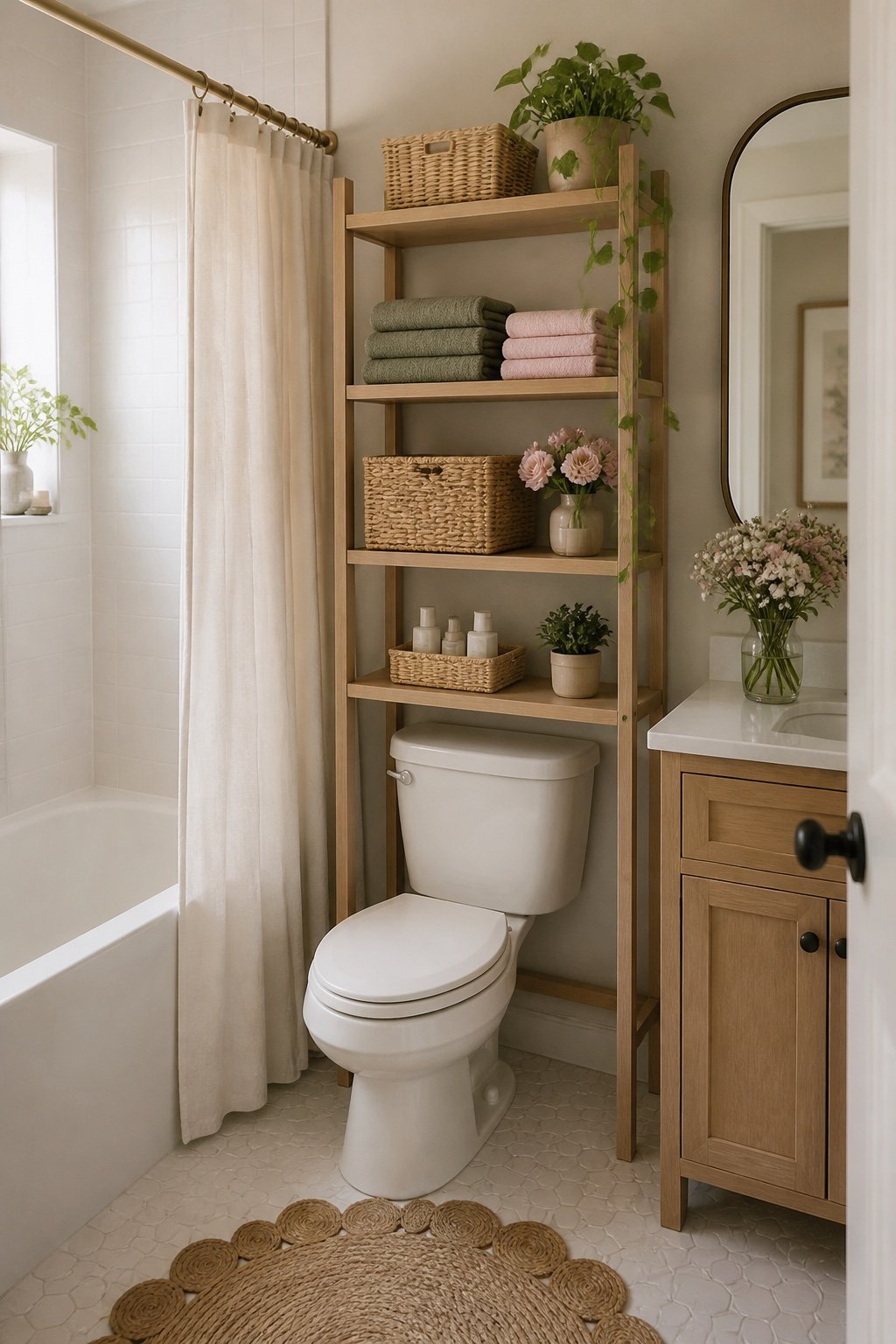
1. Add a freestanding over-toilet shelf
A narrow étagère uses the space above the toilet without touching the wall. Measure around the tank, lid, and supply line before buying. Store light towels above and keep heavier refills on the lowest shelf.
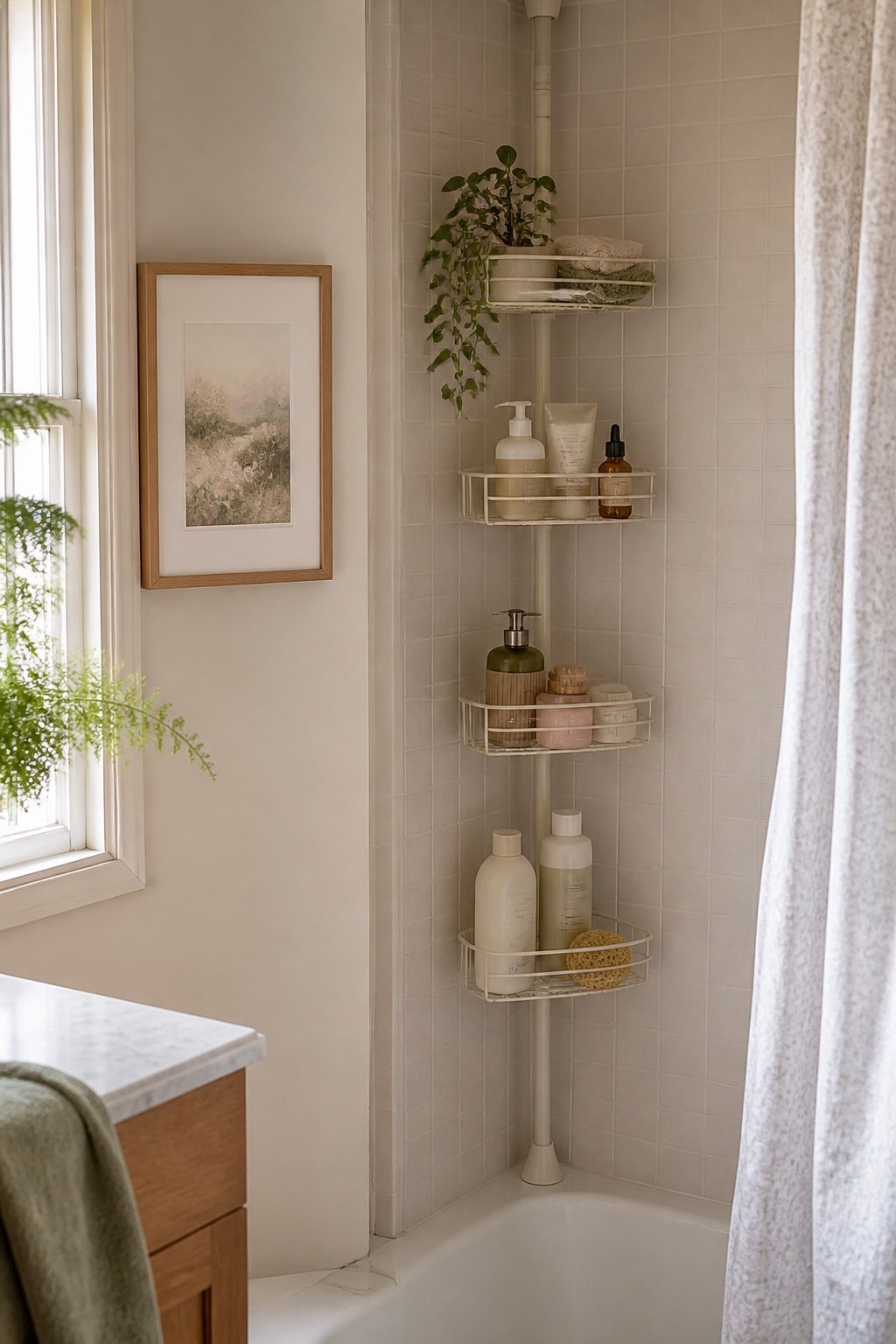
2. Use a tension shower caddy
A floor-to-ceiling tension caddy gives bottles a designated home and drains better than containers on the tub edge. Recheck the tension after the first week and never exceed the listed load.
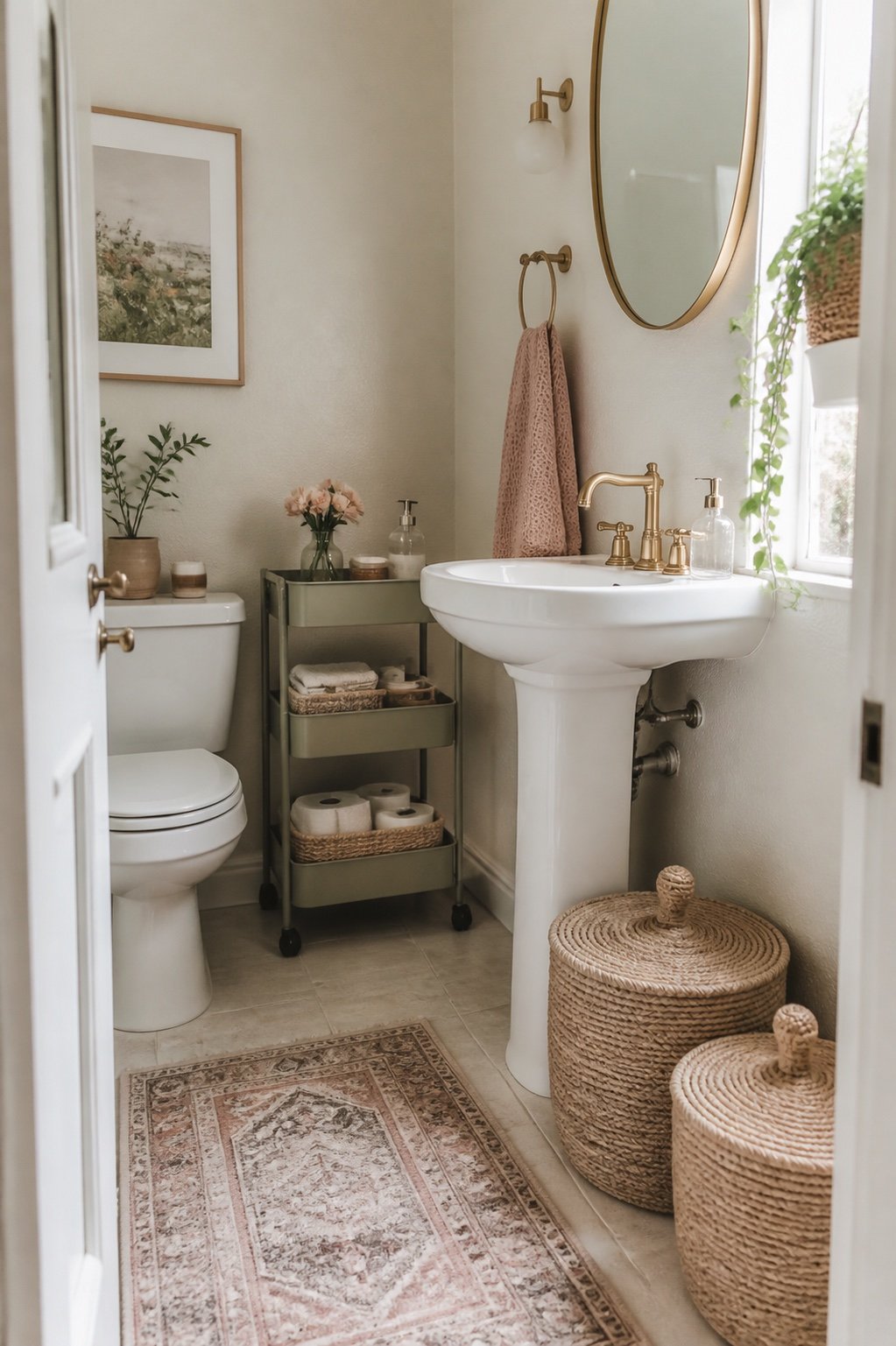
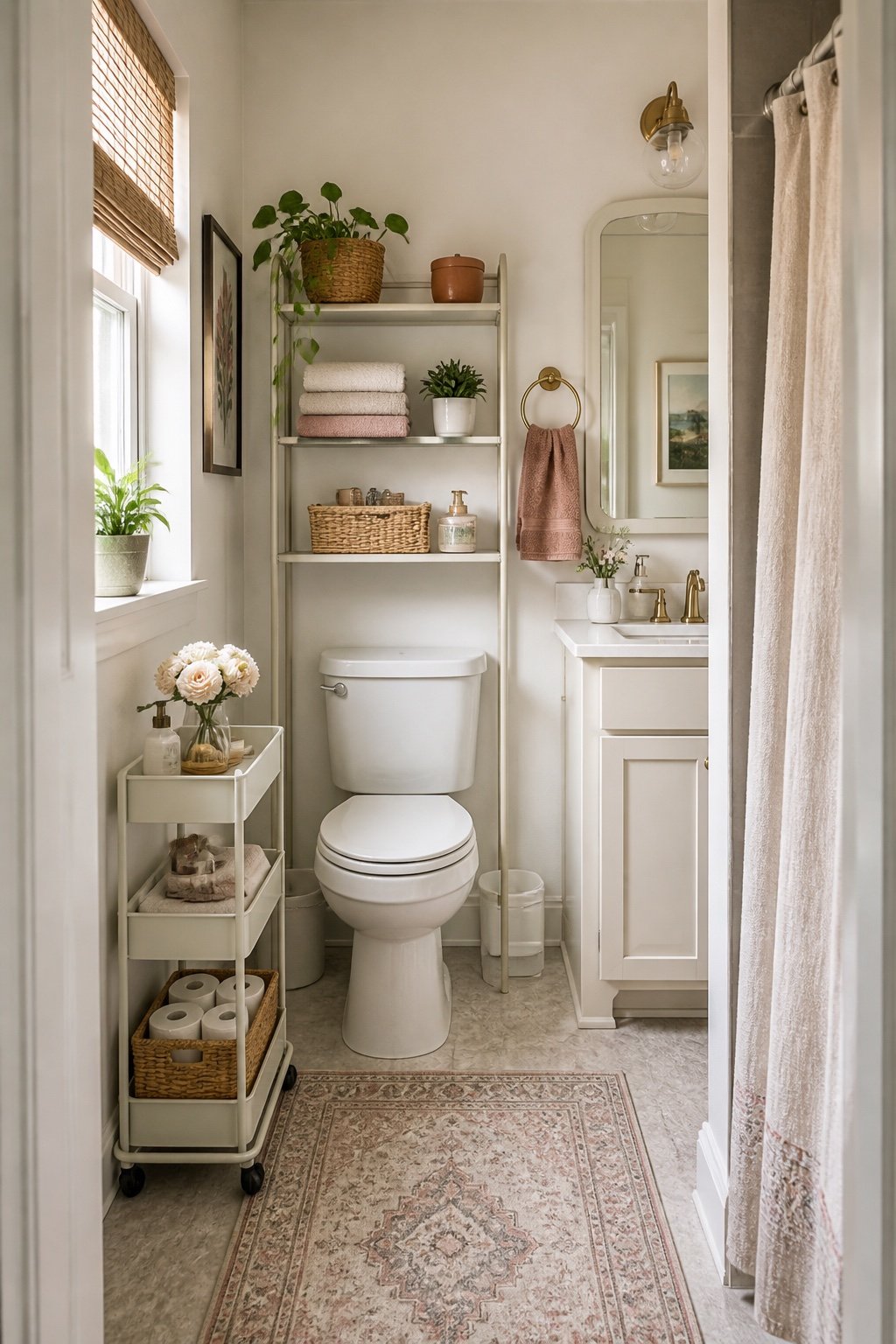
3. Roll in a slim cart
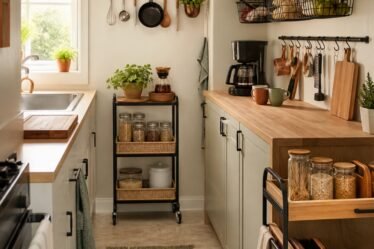
A cart between the vanity and toilet can hold daily toiletries on top and refills below. Wheels make cleaning easier. Choose one with raised shelf edges so bottles do not slide when it moves.
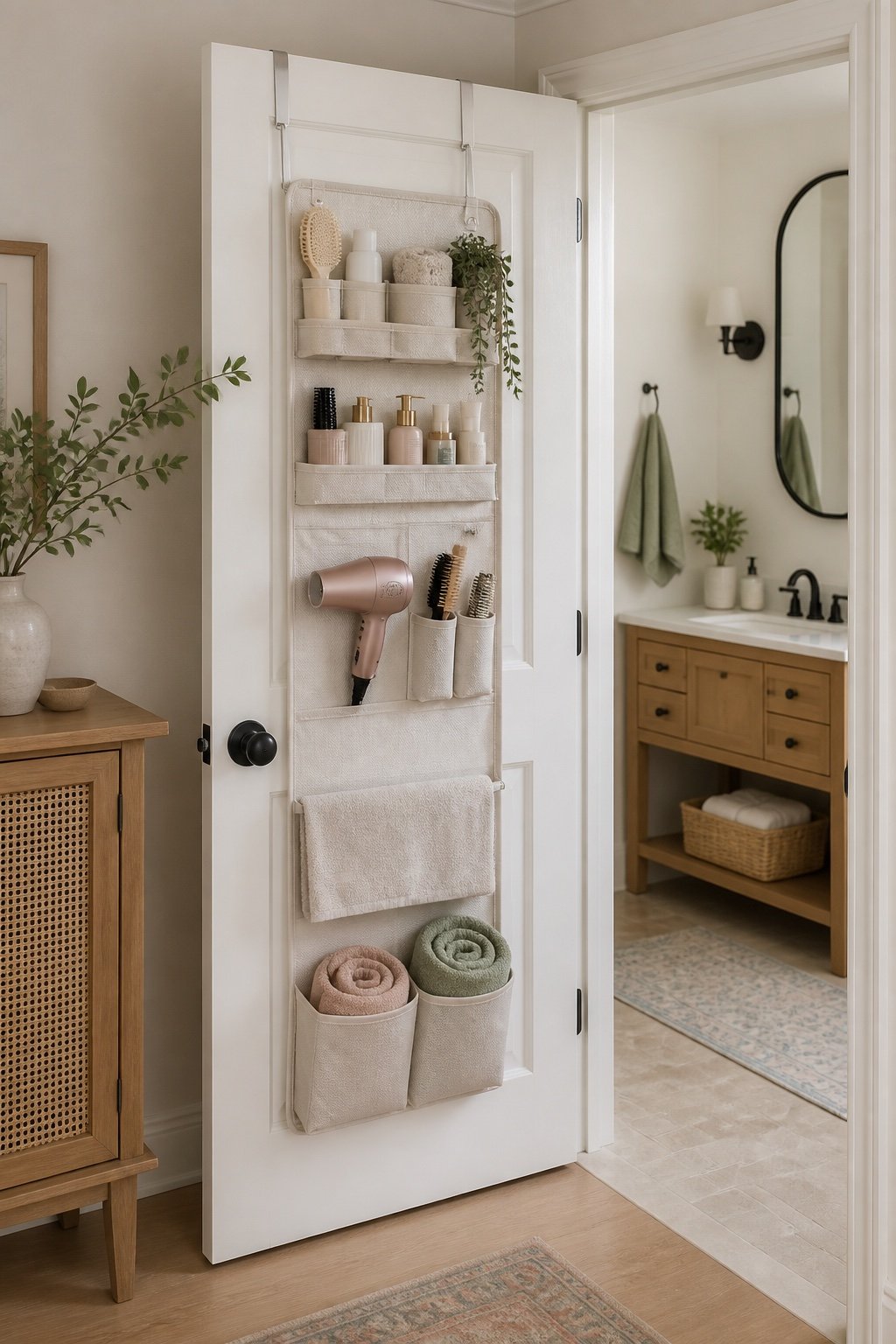
4. Hang an over-door organizer
The back of the door can handle hair tools, backup products, and cleaning cloths. Pick shallow pockets so the door still opens fully, and protect painted surfaces where hooks touch.
5. Corral sink supplies in one handled caddy
When cabinet space is missing, keep your morning routine in a handled caddy. Bring it to the sink, then return it to a shelf or cart. The counter stays clearer without hiding things you use every day.
6. Choose a mirror with a ledge
A freestanding or over-door mirror with a narrow ledge can hold small grooming items. Keep medicines somewhere dry and appropriate rather than in a humid room.
7. Slide baskets under an open vanity
Matching baskets make plumbing-heavy open space feel deliberate. Use washable liners and leave access to shutoff valves. Sort by routine—hair, skin, cleaning—instead of creating a mixed catchall.
8. Add a toilet-tank tray carefully
A stable tray can hold a tissue box or one small plant, but it should never interfere with the lid or flushing mechanism. Skip fragile glass and anything you would hate to retrieve from behind the toilet.
9. Use a shower-curtain organizer
A pocketed liner or organizer can replace a shelf in the wet zone. Distribute weight evenly and let it dry between showers to avoid trapping moisture.
10. Store spare towels on a leaning ladder
A compact ladder rack offers several hanging bars without drilling. Use one with nonslip feet, keep it away from splash zones, and avoid it where children could climb.
11. Try removable hooks for light items
Hooks can hold washcloths or an empty toiletry bag when the surface is compatible. Clean and cure the surface exactly as directed; do not trust adhesive hooks with glass, heavy mirrors, or valuables.
12. Decant only what helps
Matching containers look calm, but decanting every product creates work and can remove safety information. Use clear bins to group original packages instead, and label any safe decanted basics.
13. Keep the floor edit strict
A tiny bathroom feels larger when the route from door to sink is open. Limit floor storage to one or two pieces and lift the rest behind the door or above the toilet.
Related Perch Room guides
Frequently asked questions
What bathroom storage is safest without drilling?
Freestanding shelves, carts, baskets, and over-door units are generally the most predictable because they do not depend on adhesive. Check stability and weight limits.
Do adhesive hooks work in humid bathrooms?
Some are rated for humid environments and compatible surfaces, but performance varies. Follow the exact product directions and use them only for light, nonbreakable items.
How can I add storage around a pedestal sink?
Use a slim rolling cart, handled caddy, or washable floor basket placed where it does not block plumbing or foot space.
The best small-space solution is the one you can keep using. Start with one change, live with it for a week, and adjust before buying the next organizer or piece of furniture.