
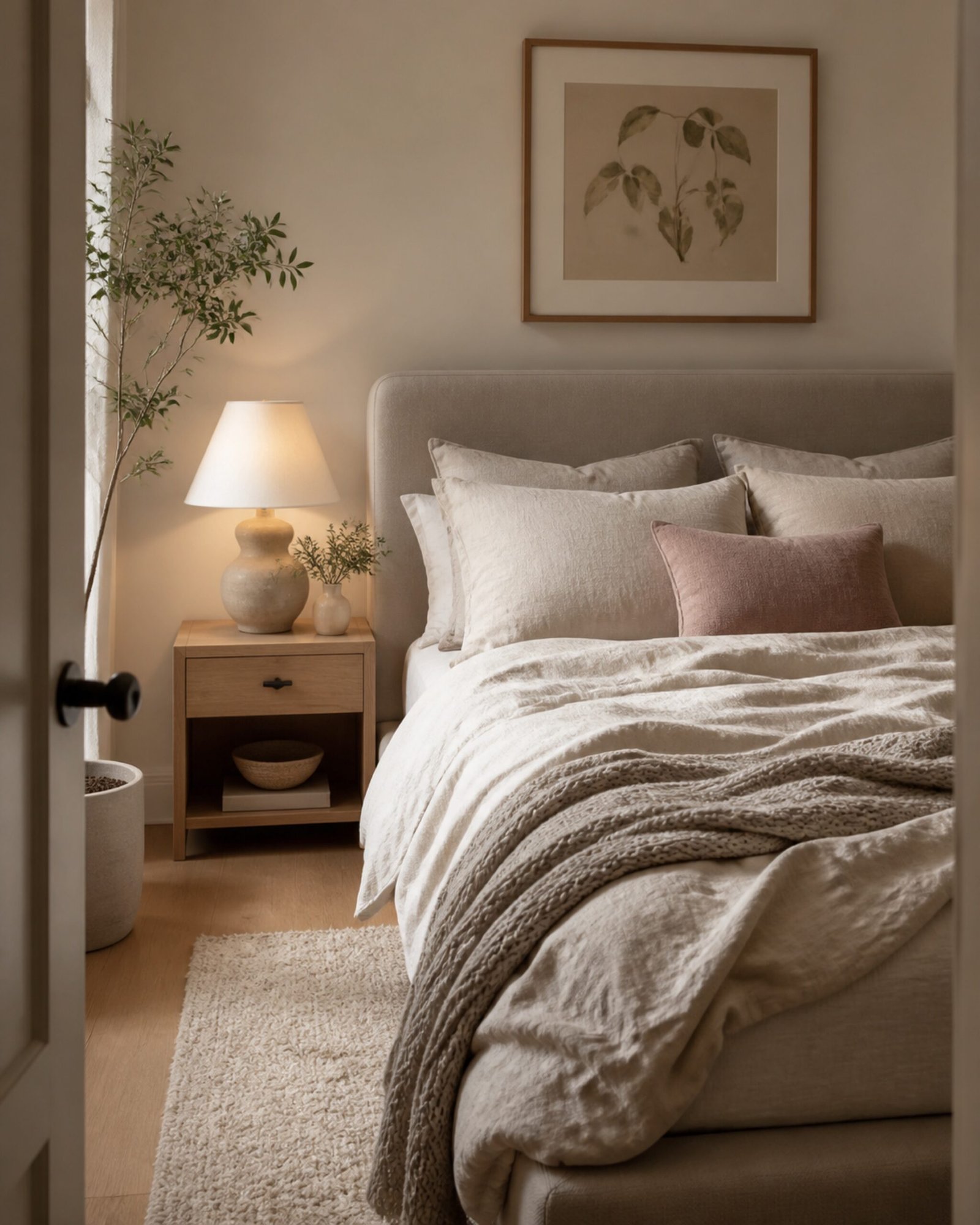
A neutral bedroom can feel restful without looking flat. The difference comes from contrast, texture, and light rather than adding more beige objects. When the major pieces are quiet, small changes in fabric, wood tone, shape, and finish become much more noticeable.
Choose a warm or cool direction before decorating. Cream, camel, oak, and soft brown create a warmer room; white, pale gray, ash wood, and muted blue create a cooler one. Mixing both is possible, but one family should lead.
Start with three related neutrals
Use a light base, a medium tone, and one deeper anchor. For example, cream walls, oatmeal bedding, and a walnut bedside table create enough range for the eye. If every surface is the same pale shade, the room loses depth.
Mix smooth and nubby fabrics
Pair crisp cotton sheets with a woven blanket, linen-look curtains, or a bouclé cushion. Two or three textures are enough to make the bed inviting. Too many heavy layers can be uncomfortable and difficult to store in a small bedroom.
Add contrast at the head of the bed
A darker headboard, a large framed print, or a folding screen gives the bed a visual anchor. Renters can create the effect with a freestanding upholstered panel or one lightweight textile, following wall and fire-safety rules.
Use warm light at more than one height
Combine a bedside lamp with a higher floor lamp or wall sconce. The overlapping light softens corners and makes neutral materials look richer. Choose bulbs with similar color temperatures so one side of the room does not look unexpectedly blue.
Bring in natural grain
Wood, rattan, cane, and woven fibers add pattern without introducing a loud color. Repeat one natural material twice—perhaps a wooden frame and a small tray—rather than buying a matching set. Natural variation is part of the appeal.
Keep the bed styling practical
Use sleeping pillows, one pair of shams if desired, and one accent cushion or lumbar pillow. A mountain of pillows creates a daily chore and can overwhelm a small bed. A neatly folded throw at the foot adds color and texture with less fuss.
Choose curtains with gentle movement
Curtains that fall close to the floor create height and soften hard edges. Measure carefully so the fabric does not puddle near a heater or collect dust. A light-filtering layer can make morning light feel calmer without darkening the room completely.
Use black or deep brown in small doses
A slim lamp, frame, knob, or line in the artwork gives a pale room definition. Repeat the dark detail two or three times so it looks intentional. Large blocks of black can feel heavy in a very small bedroom.
Add one muted color
Olive, dusty blue, clay, or muted rose can behave like a neutral when used sparingly. Try it on one cushion or piece of art first. The room will still feel restful, but the palette gains personality.
Hide the items that break the calm
Chargers, spare products, and small clothing piles create more visual noise in a neutral room because there is less color to distract from them. Use a bedside drawer, under-bed container, and one laundry basket with a lid.
Leave one surface intentionally empty
An empty section of dresser or bedside table gives the room breathing room. It also creates a practical landing place when needed. Do not feel obligated to style every corner simply because the palette is quiet.
If the bedroom is tight on space, combine these styling ideas with our renter-friendly storage solutions.
Frequently asked questions
How do I stop a beige bedroom from looking dull?
Add a darker anchor, mix at least two fabric textures, bring in natural grain, and use warm layered lighting. Depth matters more than adding many colors.
Can gray and beige work together?
Yes. Choose softened versions with similar undertones and bridge them with cream, wood, or a textile containing both colors.
How many accent colors should a neutral bedroom have?
One muted accent is often enough in a small room. Repeat it in two or three small places rather than using several unrelated colors.
A neutral bedroom feels interesting when the surfaces respond differently to light. Build a clear tonal range, add texture where you touch the room, and leave enough quiet space for those details to register.




[…] 11 Cozy Neutral Bedroom Ideas That Never Feel Boring […]
[…] 11 Cozy Neutral Bedroom Ideas That Never Feel Boring […]