
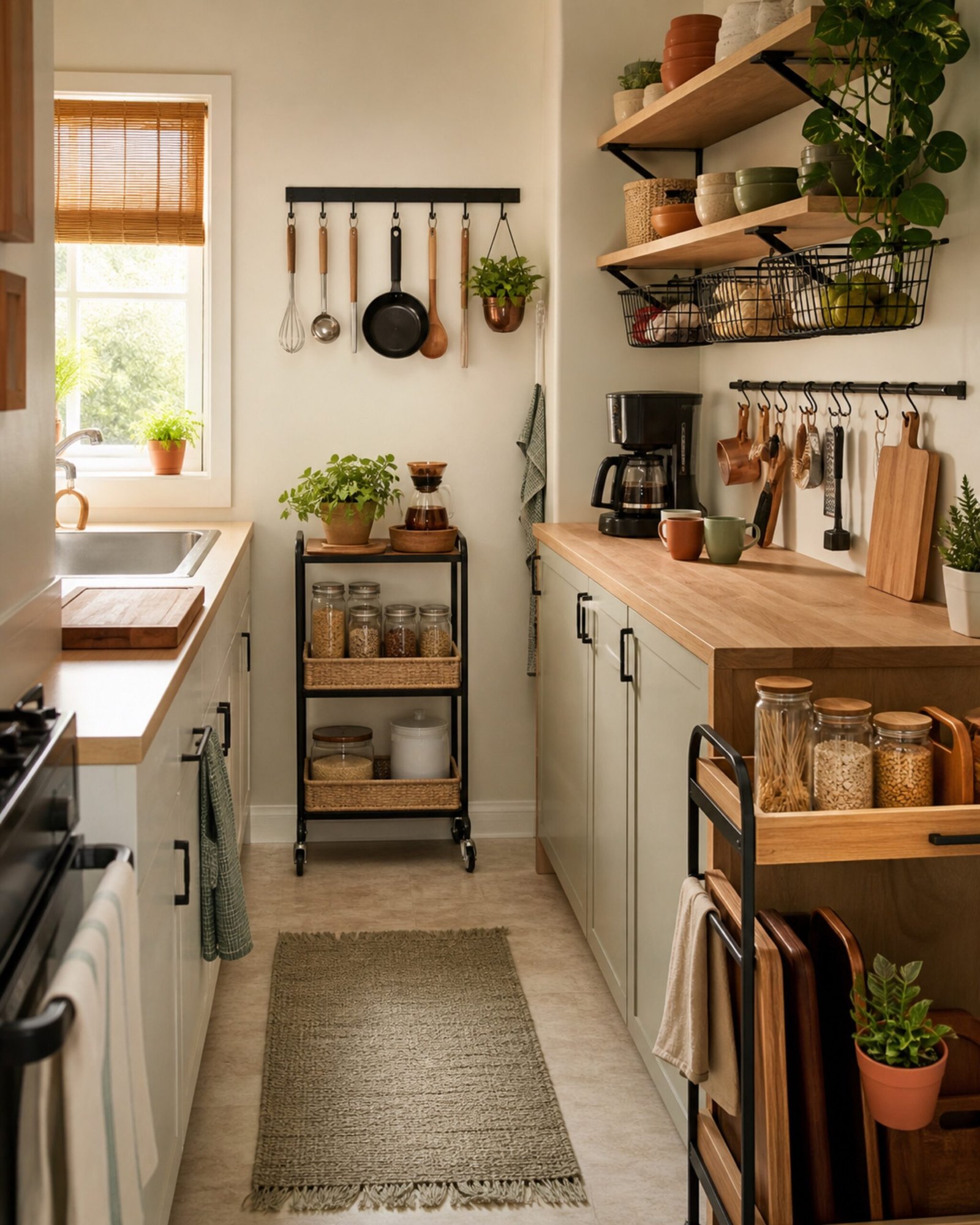
A tiny kitchen rarely needs more storage products first. It needs a clearer map of what deserves the easiest reach. Daily cookware, plates, and breakfast items should live between waist and eye level; occasional appliances and backups can move higher or farther away.
Before adding organizers, remove expired food, duplicates, and tools that do the same job. Then measure every cabinet and gap. The right organizer uses a specific empty space instead of creating another layer of clutter.
Create one everyday cooking zone
Keep the most-used pan, oil, salt, utensils, and cutting board near the main preparation area. Grouping them reduces movement and prevents supplies from spreading across every cabinet. Store oil away from direct heat and sunlight, and keep the counter clear enough for safe food preparation.
Use shelf risers inside tall cabinets
A simple riser creates a second level for plates, bowls, or pantry goods. Measure cabinet height and make sure stacks remain stable. Avoid piling heavy dishes so high that they are awkward to lift.
Turn cabinet doors into shallow storage
Over-door racks can hold light wraps, cleaning cloths, or cutting boards when clearance allows. Check that the door closes without crushing shelves or hinges. Do not place heavy glass containers on hardware that is not designed for them.
Use clear bins for deep shelves
A labeled bin turns the back of a deep cabinet into a drawer you can pull forward. Group by use—baking, snacks, breakfast—not by package shape. Choose washable bins and avoid decanting food unless containers are suitable and labels retain important dates or allergen details.
Store pans vertically
A sturdy divider can hold pans, lids, and cutting boards on edge. Vertical storage makes one item accessible without lifting a stack. Place the heaviest pieces where the divider is best supported and confirm the cabinet base can carry the load.
Add a rolling cart only if it has a parking place
A narrow cart can fill the gap beside a cabinet and hold pantry items or small appliances. Measure the route and choose locking wheels if needed. If the cart constantly blocks a doorway, it is not extra storage—it is an obstacle.
Treat counter space as active workspace
Keep only items used daily on the counter. A tray can group coffee or tea supplies and make them easy to move. Store rarely used appliances in a cabinet or another nearby storage area so meal preparation has a clear, clean surface.
Use the refrigerator side cautiously
Magnetic racks can hold light items when the appliance manufacturer and layout allow it. Do not block vents, crowd heat-dissipation space, or store breakables where they can fall. Paper lists and a lightweight timer are often safer uses of the surface.
Make the area under the sink easy to inspect
Use one removable caddy for current cleaning supplies and a shallow tray to catch small leaks. Avoid stacking products where labels disappear, never mix cleaning chemicals, and follow storage warnings for homes with children or pets.
Keep a one-in, one-out rule for gadgets
Small kitchens lose function when single-purpose tools multiply. Before adding a gadget, decide where it will live and which existing item it replaces. A drawer that closes easily is a better goal than fitting one more object inside.
For the rest of the apartment, continue with our renter-friendly hidden storage ideas.
Frequently asked questions
How do I add kitchen storage without drilling?
Use shelf risers, freestanding racks, over-door organizers that fit correctly, bins, dividers, and a measured rolling cart. Follow weight and clearance limits.
What should stay on a tiny kitchen counter?
Only items used almost every day and a clear area for food preparation. Group small essentials on one washable tray.
Are magnetic racks safe on a refrigerator?
Only when they do not block vents or required clearance and are used within their rating. Check the appliance instructions and avoid heavy or breakable contents.
Tiny-kitchen storage improves when access follows frequency. Put daily tools in the easiest zone, use vertical space inside cabinets, and protect the counter as the room’s most valuable working surface.



[…] 10 Tiny Kitchen Storage Ideas That Work for Renters […]
[…] 10 Tiny Kitchen Storage Ideas That Work for Renters […]